
English
Views: 0 Author: Site Editor Publish Time: 2026-07-09 Origin: Site


Traditional aluminum windows suffer from severe conductive heat loss. Standard double-hung designs often face ongoing air infiltration challenges. Homeowners building or upgrading energy-efficient homes often struggle during the material selection process. You want to balance the incredible durability and slim architectural profiles of metal windows. However, you also need to satisfy strict modern energy codes. Integrating modern thermal break technology solves this dilemma perfectly. It bridges the gap between architectural aesthetics, longevity, and high-performance energy conservation. This article provides a transparent, metric-driven evaluation of this unique engineering solution. We will explore why this specific window configuration meets modern energy-saving standards. We examine real-world performance realities carefully. We outline the upfront costs and rigorous installation requirements. You will understand how these units transform home energy consumption overall. We guide you through the structural mechanics and exact performance metrics. Read on to discover if this modern window technology fits your upcoming home upgrade project.
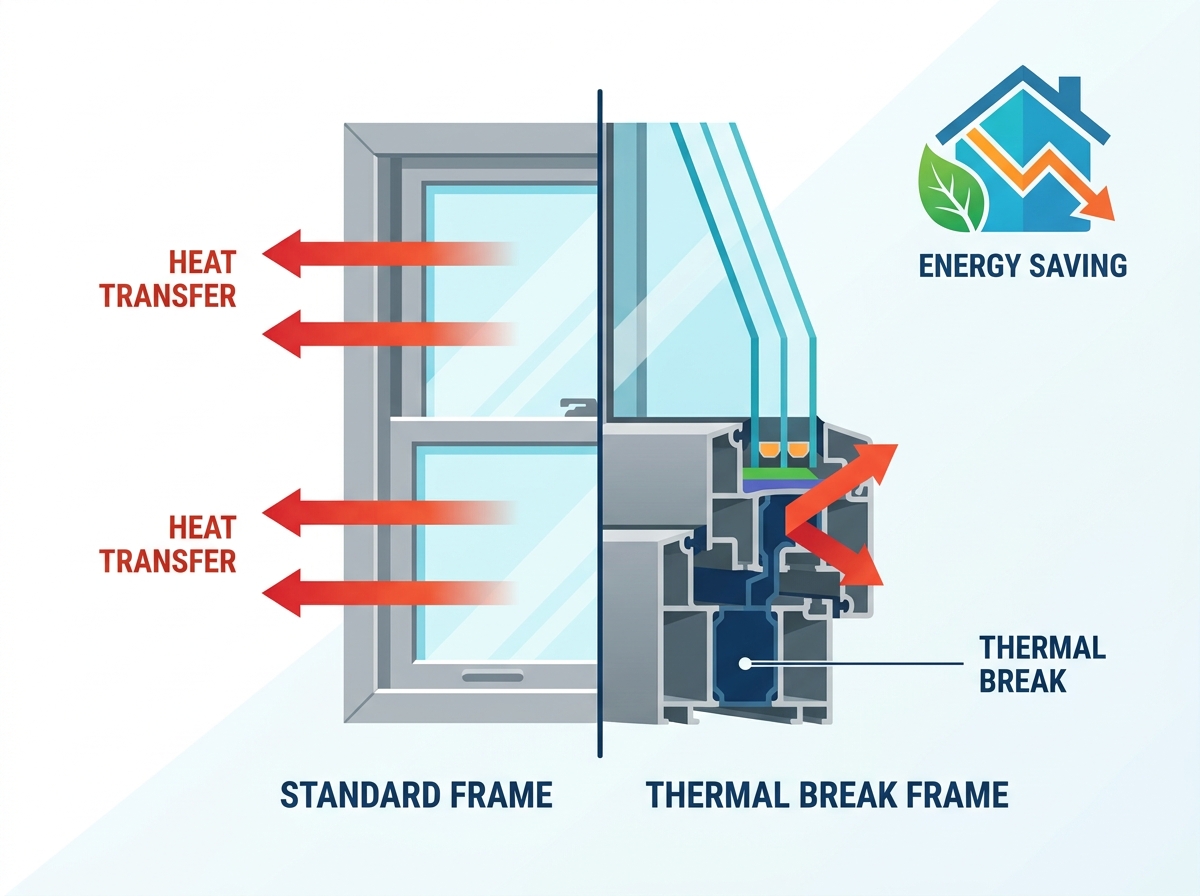
Thermal break technology isolates the interior and exterior metal frames, drastically reducing conductive heat and cold transfer.
Double-hung configurations allow for passive cooling through natural ventilation (opening top and bottom sashes simultaneously).
Evaluating these windows requires looking beyond the frame to NFRC ratings, specifically U-Factor and Solar Heat Gain Coefficient (SHGC).
While upfront costs are higher than standard vinyl, the extended lifespan and structural integrity offer a predictable long-term ROI for energy-focused properties.
Aluminum is a highly conductive material. Non-broken metal frames act as a primary source of thermal bridging in residential buildings. This structural flaw causes massive winter heat loss. It equally invites unwanted summer heat gain. Aluminum easily transfers temperature from the outside air directly into your living space. Many older homes utilize solid aluminum frames. Touch these older frames during a winter freeze. They feel ice cold. The metal acts as a direct thermal highway. It pulls valuable furnace heat directly outside. Standard metal frames force your HVAC system to work constantly.
Modern engineering provides a brilliant solution to stop this energy drain. Manufacturers physically separate the inner and outer aluminum profiles. They mechanically lock a continuous barrier between these two metal halves. Engineers typically use a polyamide strut or polyurethane resin. This barrier prevents heat energy from moving through the frame. The interior metal stays entirely isolated from the exterior metal. Heat cannot easily travel across this non-conductive divide. Polyamide offers excellent structural rigidity for residential applications. It expands and contracts at the exact same rate as aluminum. This keeps the window perfectly stable across extreme temperature swings.
We must deeply consider condensation resistance when evaluating these frames. Tight, energy-efficient homes require careful indoor moisture management. The thermal barrier prevents the interior framing from reaching the dew point. Warm indoor air holds considerable moisture. When this warm air hits a cold surface, moisture condenses into water droplets. Because the thermal break keeps the interior frame warm, condensation does not form. This mechanism effectively mitigates indoor condensation. It lowers subsequent mold risks inside your wall cavities. Building codes for energy-efficient homes demand this high level of moisture control. You avoid costly water damage. You also maintain healthier indoor air quality for your family.
Double-hung windows offer incredible strategic airflow. You can achieve passive convection cooling using the Stack Effect. This natural phenomenon rapidly cools a room without electricity.
Open the bottom sash slightly. This lets cool, fresh exterior air flow inside.
Open the top sash simultaneously. This gives rising warm indoor air an escape route.
Allow the natural convection current to cycle the air.
Experience passive cooling throughout the living space.
This strategic airflow reduces your reliance on HVAC systems. You save significant energy during spring and autumn transition seasons.
Historically, double-hung designs carry a "leaky" stigma. They often fall behind casement windows in air infiltration ratings. Casement windows seal tightly against a single static frame. Double-hung sashes must slide up and down constantly. This sliding action historically compromised the weather seal. Older models let winter drafts slip through the vertical tracks.
Modern engineering completely fixes this historical problem. Manufacturers utilize advanced interlocking meeting rails. When you close the sashes, these rails lock together aggressively. They compress specialized seals to block air drafts completely. Multi-point weatherstripping eliminates gaps along the vertical sash tracks. Engineers also integrate sophisticated weep holes into the sill. These engineered holes efficiently direct rainwater away from the structural opening. High-quality thermal break double hung window units now achieve commercial-grade air and water resistance. You get the pure ventilation benefits without suffering any drafty drawbacks. They perform beautifully even in high-wind environments.
You must evaluate specific NFRC (National Fenestration Rating Council) ratings before purchasing. Do not rely solely on manufacturer marketing claims. The U-Factor measures overall heat transfer through the entire window unit. A lower U-Factor means superior insulation. Guide your buying decisions using local ENERGY STAR® requirements. The thermal break drastically lowers the frame's contribution to the total U-Factor.
Solar Heat Gain Coefficient (SHGC) represents another vital metric. It measures how much solar radiation passes through the glass. SHGC remains a highly climate-dependent choice. You should select your SHGC based on your regional weather patterns.
Choose a low SHGC (under 0.25) for cooling-dominated climates. This blocks intense summer sun in places like Florida or Arizona.
Choose a higher SHGC (above 0.40) for heating-dominated climates. This captures free winter solar heat in places like Maine or Minnesota.
Choose a balanced SHGC (around 0.30) for mixed climates.
Glass packages matter just as much as the framing material. A thermally broken frame provides a strong foundation. However, you must pair it with high-performance glazing. We recommend low-emissivity (Low-E) dual or triple-pane glass. Low-E coatings contain microscopic metallic layers. Manufacturers apply these transparent layers directly to the glass surface. The coating acts like a thermal mirror. It reflects interior winter heat back into the room. During summer, it reflects exterior solar heat away from the house. Fill the sealed gaps between panes with argon or krypton gas. This combination achieves true "energy-saving" status. The frame only solves edge-of-glass and structural heat loss. The glazing unit handles the vast center-of-glass area.
Climate Zone Type | Recommended U-Factor | Recommended SHGC | Glazing Recommendation |
|---|---|---|---|
Heating-Dominated (Northern) | ≤ 0.27 | ≥ 0.32 | Triple-pane, High-Solar Low-E, Argon fill |
Mixed Climate (Central) | ≤ 0.30 | ≤ 0.25 | Dual-pane, Moderate-Solar Low-E, Argon fill |
Cooling-Dominated (Southern) | ≤ 0.40 | ≤ 0.25 | Dual-pane, Low-Solar Low-E, Argon fill |
Thermally broken aluminum units command a distinct price premium. They cost noticeably more upfront than standard vinyl or wood alternatives. However, the extended lifecycle value strongly justifies the initial expense. We evaluate durability and maintenance needs to understand this true long-term value.
Aluminum naturally resists warping, expanding, or contracting. Extreme temperature swings severely affect standard vinyl windows. Vinyl frames expand during hot afternoons. They contract during freezing nights. This constant daily movement degrades internal weather seals over time. Aluminum maintains its exact structural dimensions indefinitely. The factory seals stay incredibly tight. The moving sashes continue to operate smoothly decades after installation. You avoid the costly replacement cycles common to cheaper window materials.
We advise avoiding exaggerated "eliminate your energy bill" claims. Some aggressive salespeople promise unrealistic financial returns. Instead, look at realistic energy cost reductions. Standard Department of Energy (DOE) models show baseline percentage reductions. Upgrading from single-pane or non-broken aluminum windows drops your overall HVAC load significantly. The thermal break technology stops conductive heat transfer. The Low-E glass stops radiant heat transfer. Together, they dramatically lower your daily cooling and heating demand. You consume substantially less electricity and natural gas every month.
This predictable energy performance creates a reliable long-term ROI. It perfectly suits energy-focused properties aiming for net-zero or highly efficient statuses. The investment scales logically as you upgrade other parts of the building envelope. Replacing windows complements added attic insulation perfectly. It also enhances upgraded HVAC equipment performance. The sheer structural rigidity guarantees the investment lasts long enough to realize maximum energy savings.
Even the highest-rated window will fail if installed poorly. Thermal flanking represents a massive implementation risk. This phenomenon occurs when the surrounding wall cavity lacks proper insulation. Heat easily bypasses the highly efficient window frame. It travels straight through the uninsulated rough opening gaps. This flanking ruins your expected energy savings entirely. You must ensure builders insulate the rough opening adequately.
Proper flashing and air sealing absolutely prevent this failure. Installers must follow rigorous building science principles. They should strictly follow these installation steps:
Apply self-adhering flashing tape to the rough sill carefully.
Install a rigid sill pan to direct incidental water outward.
Seat the window perfectly plumb, level, and square.
Apply low-expansion window foam around the entire interior perimeter.
Seal the exterior cladding joints using high-grade elastomeric sealant.
Contractors must use low-expansion foam specifically designed for doors and windows. High-expansion foam can warp the surrounding jambs. Low-expansion foam safely fills structural gaps without bending the aluminum frame. It maintains a continuous building envelope from wall to window.
Follow strict shortlisting advice when hiring contractors. Require specific certifications when comparing installation quotes. Look for AAMA (American Architectural Manufacturers Association) performance labels. Demand NFRC certified stickers on the physical window glass. The AAMA label guarantees the structural integrity and water resistance of the frame. The NFRC label ensures third-party verification of all thermal data. You avoid falling for empty manufacturer marketing claims. Rigorous quality control during installation guarantees your expected energy efficiency.
A thermal break double hung window is a highly suitable choice. It fits homeowners who want the unmatched structural strength of metal. You retain the slim, modern sightlines characteristic of aluminum frames. You also gain the immense passive ventilation benefits of a double-hung design. It achieves all this without compromising your strict energy goals. The modern technology isolates temperatures perfectly. The durable hardware operates smoothly for decades.
Your next steps require precise planning. We strongly recommend scheduling a comprehensive home energy audit. An auditor can determine the exact U-Factor and SHGC requirements for your specific climate zone. Use this customized data to request detailed quotes. Only reach out to certified installers who possess deep experience installing thermally broken units. Proper product selection paired with meticulous installation ensures maximum energy savings.
A: High-quality thermally broken aluminum can perform competitively with standard vinyl in terms of U-Factor, while offering significantly higher structural rigidity and longevity, which maintains the air seal longer over the window's lifespan.
A: While the frame resists condensation, high indoor humidity levels combined with extreme outdoor cold can still cause condensation on the glass. Ensure the home has proper mechanical ventilation and check the spacer type used between the glass panes.
A: While difficult, it is possible if the specific window model uses triple-glazing, warm-edge spacers, and achieves stringent passive building infiltration standards. However, tilt-turn or casement windows are more traditionally used in these extreme-efficiency scenarios.