
English
Views: 0 Author: Site Editor Publish Time: 2026-07-03 Origin: Site


Rain nourishes your garden, but it often brings immense frustration to your living space. You constantly desire fresh outdoor air. However, opening a standard sash means immediately inviting a heavy downpour inside. Homeowners in high-rainfall climates face a frustrating, constant compromise. You must balance maintaining healthy indoor air quality against preventing severe water damage. Standard designs must remain tightly closed during passing storms. This leads directly to stuffy, uncomfortably humid interiors.
Top-hinged, outward-opening designs offer a brilliant structural workaround. They solve this exact environmental challenge efficiently. This article moves beyond basic product definitions. We evaluate the mechanical advantages and installation realities of these specialized units. We detail specific placement strategies for damp climates. We will help you understand how a rainproof awning window serves as an informed structural upgrade. You can finally enjoy fresh breezes regardless of the weather outside.
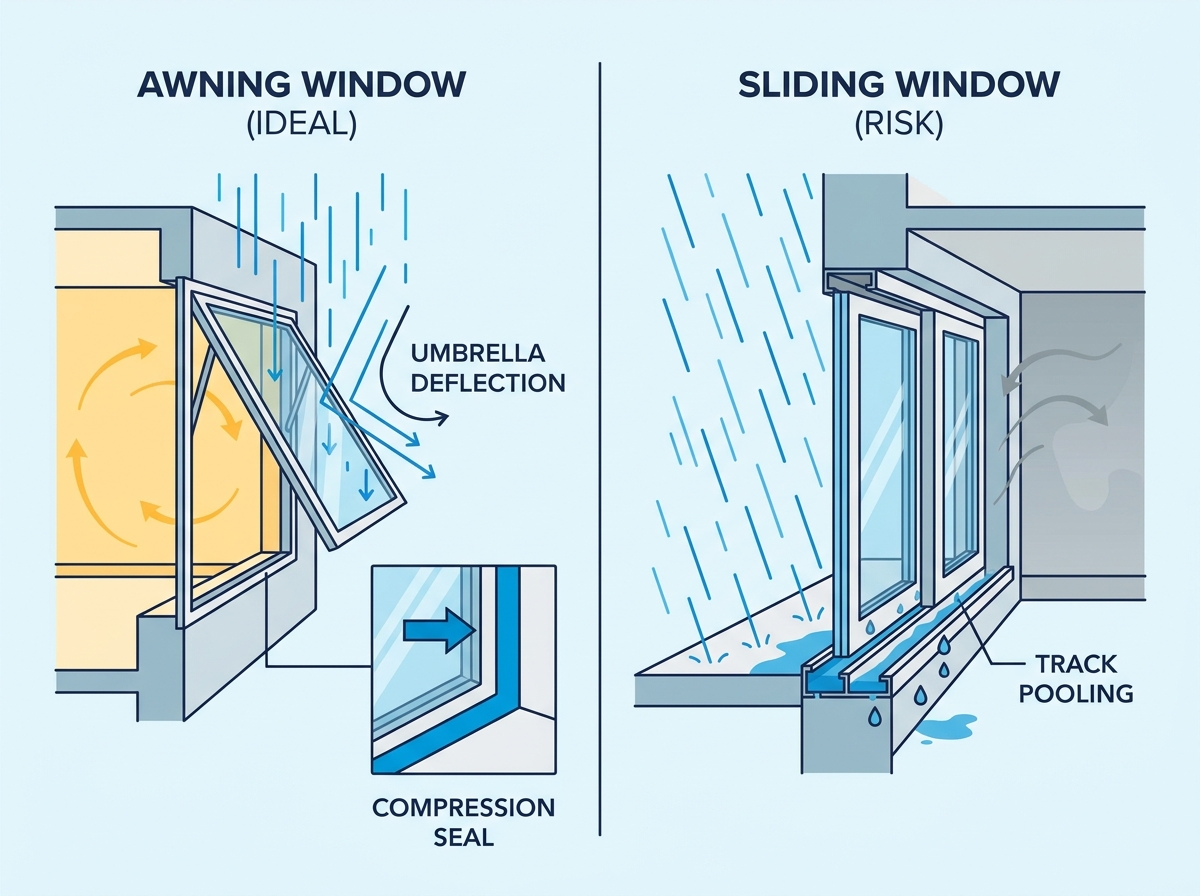
The "Umbrella" Mechanism: Top-hinged designs naturally deflect vertical and light wind-driven rain, allowing for continuous ventilation.
Superior Compression Seals: Unlike sliding windows, awning windows create a tight, highly energy-efficient seal when closed, as wind pressure pushes the sash firmly against the weatherstripping.
Strategic Application: They are most effective when placed high on walls or above fixed picture windows, maximizing airflow while maintaining privacy and security.
Known Limitations: Awning windows require exterior clearance to open and can be difficult to clean from the inside on upper stories.
Living in a damp climate presents an ongoing architectural challenge. You constantly fight to balance adequate fresh air and strict moisture control. When multi-day rainstorms hit, you typically seal your house tight. This defensive action leads directly to poor indoor air quality. Condensation builds up rapidly on cold glass panes. Moisture trapped inside has nowhere to escape. Mold spores thrive in these humid, stagnant environments. Breathing stale air daily affects your comfort. Your family deserves a healthy, breathable interior space.
We must examine the failure of traditional options. Traditional window styles simply cannot handle active rainfall. Sliding sashes rely on bottom tracks to operate. These tracks essentially act as miniature gutters. They quickly fill up with water during heavy showers. They eventually overflow right into your living room. Double-hung models offer zero protection from vertical drops. Rain falls straight down through the open mesh screen. Standard casement frames swing sideways on vertical hinges. They literally act like sails catching the breeze. They funnel wind-driven water directly onto your expensive flooring.
Water intrusion presents a serious financial risk to your home infrastructure. You face expensive and disruptive sill rot if wood frames get repeatedly soaked. Damaged drywall requires immediate, costly replacement. Hardwood floors warp and buckle when exposed to standing water. You must weigh the cost of these potential structural repairs. Compare them against the upfront investment in weather-appropriate fenestration. Upgrading to specialized hardware protects your property long-term. It prevents immediate storm damage. It simultaneously improves your daily ventilation routine. You gain peace of mind during unpredictable weather.
A highly specific mechanical design makes these units ideal for stormy weather. The outward-angled sash acts as a physical, protective barrier. It functions exactly like a small umbrella over the wall opening. This structural deflection directs water runoff away from the interior sill. Gravity pulls the rain drops safely down the exterior glass. You enjoy a steady flow of fresh, cool air simultaneously. You do not worry about interior puddles ruining your finishes. This simple structural geometry changes everything about wet-weather ventilation.
Weatherstripping plays a crucial role in daily performance. Most traditional sliding frames rely on basic friction seals. These cheap seals degrade significantly over time through constant rubbing. Conversely, top-hinged designs utilize advanced compression seals. Positive external wind pressure actually works to your advantage here. When locked closed, heavy gusts push the sash directly into the frame. This natural action firmly compresses the rubber weather seal. It blocks drafts and dampness completely. It creates an incredibly tight barrier against the elements.
Humid environments demand robust, long-lasting hardware endurance. You must carefully evaluate the materials used in the crank mechanisms. These rotary operators require high corrosion resistance. Coastal or highly humid areas accelerate rust development on cheap metals. Friction hinges must safely support the heavy insulated glass without sagging. Premium manufacturers utilize stainless steel components for this exact reason. They prevent rust build-up inside the moving joints. Quality internal hardware ensures long-term smooth operation. You want a crank handle turning effortlessly year after year, regardless of humidity levels.
Homeowners frequently debate between different operational frame styles. We must evaluate their weather performance objectively. You need the right architectural tool for your specific climate.
Both architectural styles utilize a hand crank to push outward. However, their internal hinges sit on completely different sides. When assessing ventilation in active rain, the top-hinged design clearly wins. Vertical casements act as open boat sails. They catch sideways, wind-driven drops easily. They actively funnel those drops straight indoors. Conversely, for maximum airflow volume on clear sunny days, casements win. They open completely perpendicular to catch passing side breezes. You must decide which scenario matters more for your daily life.
Track-based sliding systems operate entirely differently. Seal integrity heavily favors the top-hinged models. They use a highly durable compression seal all around the perimeter. Sliding tracks rely on simple friction seals. These fuzzy strips wear down quickly. They allow rainwater to pool in the bottom track. Conversely, exterior space requirements heavily favor sliders. Sliders move cleanly within their own flush frame. They require zero exterior clearance over walkways. They never project outward into your yard space.
The final verdict remains quite clear for wet climates. Top-hinged models provide the absolute superior choice. They offer consistent, passive ventilation during inclement weather. You just need to ensure adequate exterior yard clearance allows for them.
Performance Feature | Awning Window | Casement Window | Sliding Window |
|---|---|---|---|
Rain Deflection | Excellent (Acts as an umbrella) | Poor (Funnels water inside) | Poor (Tracks fill and overflow) |
Seal Integrity | High (Compression seal) | High (Compression seal) | Low (Friction seal wears out) |
Clear-Day Airflow | Moderate (Blocks direct wind) | Maximum (Catches side breeze) | Moderate (Only half opens) |
Exterior Space Needed | Requires outward clearance | Requires outward clearance | Zero clearance required |
Placing these units correctly maximizes their daily functional utility. You should position them strategically around your specific home layout. Thoughtful placement solves distinct environmental challenges effortlessly.
Here are the most effective placement strategies you can implement:
High-wall installations (Clerestory): Place them near the ceiling in your main bathrooms. Kitchens benefit greatly from this exact architectural setup too. Natural thermodynamics push warm, damp air upward. This rising humid air escapes easily through the top vents. Rain stays safely outside the elevated glass. You also preserve your family's essential visual privacy. Neighbors cannot see inside.
Transom configurations (Stacked): Combine stationary picture windows with these operable units. You can place them seamlessly underneath or right on top. This specific setup allows for expansive, uninterrupted outdoor views. You still get functional, safe ventilation at the base or crest. It creates a striking visual aesthetic. You enjoy the best of both functional worlds.
Basement and ground-level utility: Protect your lower-level egress rooms from sudden flooding. Heavy summer downpours often overwhelm typical window wells. Outward-opening top-hinged designs prevent localized well pooling. They direct the run-off outward. They keep dark utility rooms dry, fresh, and well-ventilated. They prevent the classic musty basement smell entirely.
Strategic placement ensures maximum daily comfort. You easily create dedicated "breeze corridors" throughout your entire floor plan. You effectively flush out stale, damp air effortlessly. Careful architectural planning turns a simple fixture into a powerful climate control tool.
Every structural architectural choice comes with inevitable trade-offs. You must clearly understand the implementation risks before purchasing anything.
First, consider your exterior clearance constraints carefully. The heavy glass pushes outward from the exterior wall. You seriously risk opening it into high-traffic pedestrian walkways. Patios and outdoor decks require highly careful spatial planning. You absolutely do not want a dangerous head-level hazard. You must measure the exact projection distance before authorizing installation.
Next, acknowledge the primary maintenance cleaning challenge. Consumer feedback frequently highlights this annoying practical issue. Upper floor installations prove surprisingly difficult to clean. You cannot easily reach the exterior glass from inside your room. The glass pane tilts outward and away from your reach. You will likely need a tall exterior ladder. Professional window washers often charge more for these specific units.
Screen placement also differs drastically from standard sliding designs. Screens sit firmly on the inside face. This protected location keeps the delicate mesh away from harsh elements. It extends the screen lifespan significantly. However, you must manually remove them every time. You cannot wipe the interior glass without removing the bug screen first. This adds a step to your spring cleaning routine.
Finally, understand the extreme weather limitations involved. These units remain highly water-resistant. They are not entirely waterproof submarine hatches. Severe, horizontal, hurricane-force winds pose a serious problem. Strong wind-driven storms can blow heavy drops directly up. Water travels up and under the open outward sash. You must definitely close them tightly during extreme weather events.
Top-hinged frames offer the most pragmatic architectural solution. They provide continuous ventilation in remarkably wet climates. They naturally block vertical downpours while encouraging fresh airflow. However, they are not a universal replacement for every single room. You must use them strategically for the best structural results.
Buyers should audit their specific floor plans carefully. You need to identify your primary stale air zones. Bathrooms, active kitchens, and damp basements represent critical moisture control areas. You should prioritize these specific targeted installations first. Focus on spaces requiring constant humidity management.
Take immediate action to improve your indoor environment today. Walk around your property exterior to check clearances. Measure the available space outside your targeted rooms. Consult a professional installer regarding your structural options. Ask them to evaluate the hinge load limits for your desired custom glass size.
A: Yes, you can leave them open during moderate vertical rain. The angled glass acts as a protective canopy. However, during high winds or severe horizontal storms, they must be closed. Extreme gusts can blow water up and under the outward-angled sash, causing indoor leaks.
A: Yes, they seal incredibly tightly. Because they feature an advanced compression seal, the sash locks firmly against the frame. They offer significantly better overall energy efficiency and draft protection than sliding or double-hung models. Wind pressure actually pushes them tighter shut.
A: Due to the heavy glass weight resting on top hinges, they are typically wider than they are tall. However, extreme widths require specialized, heavy-duty hardware. This prevents sash sagging over time. Always consult manufacturer sizing limits before ordering large custom dimensions for your home.