
English
Views: 0 Author: Site Editor Publish Time: 2026-08-13 Origin: Site


Exterior entryways serve as your building's primary defensive boundary against unpredictable nature. They consistently represent a critical vulnerability in any modern building's structural envelope. Water ingress, severe thermal bridging, and daily structural fatigue frequently compromise these heavily used entry points.
Historically, metal frames struggled to perform well in these demanding residential and commercial applications. Early aluminum was highly prone to massive energy loss and damaging interior condensation. Modern engineering has finally resolved these glaring issues, but unfortunately, not all products currently on the market meet the rigorous standards required for true exterior durability.
Our main goal is to fully clarify the complex technical realities behind modern fenestration. This guide provides ambitious buyers, builders, and architects a strictly evidence-based evaluation framework. You will quickly learn how to assess, specify, and confidently shortlist weatherproof aluminum doors for any challenging exterior application.
Aesthetic appeal matters little if structural engineering fails. True weather resistance relies heavily on specific material sciences. Let us examine the mandatory technical specifications you must demand.
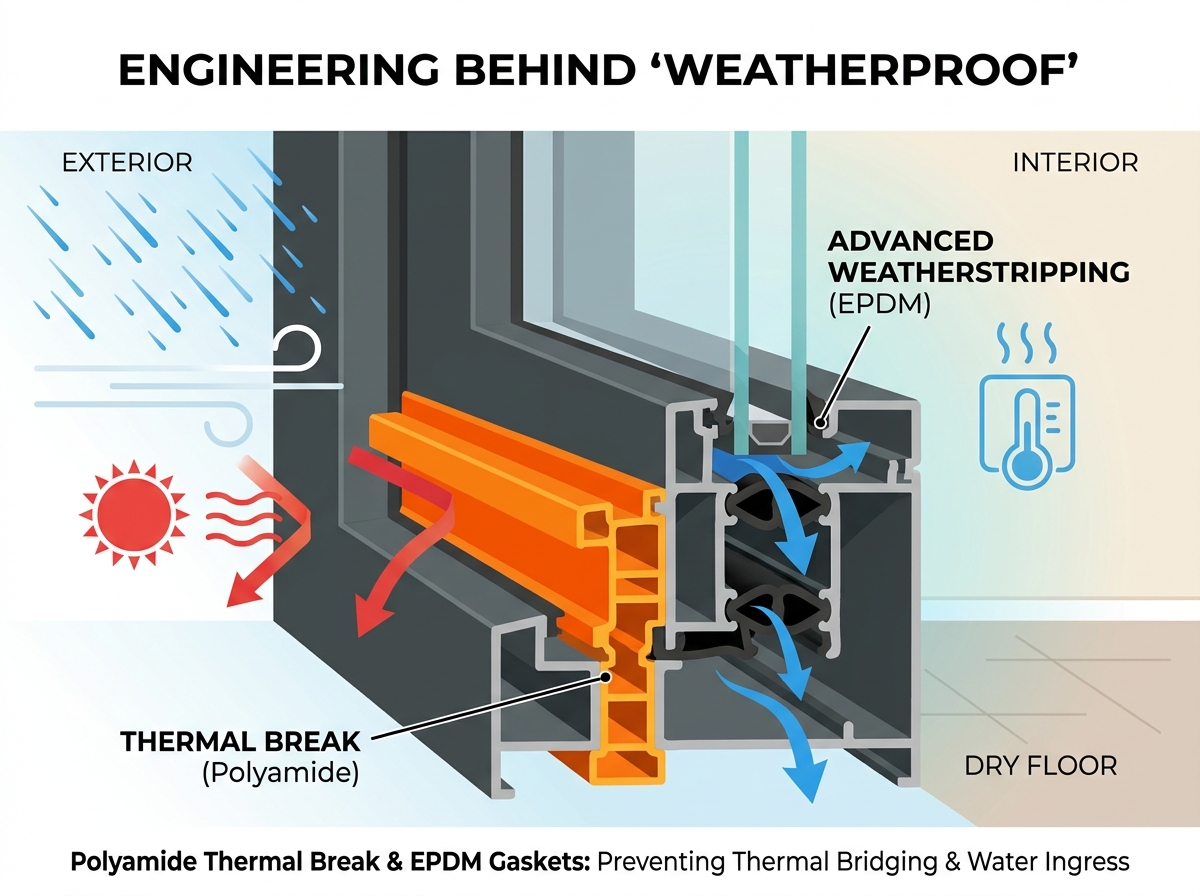
First, thermal bridging mitigation is absolutely essential. Raw metal conducts heat very rapidly. An unbroken aluminum frame pulls winter cold directly inside your home. This dynamic creates internal frosting and damaging condensation. Engineers solve this using polyamide thermal breaks. They extrude the frame in two separate sections. A reinforced structural plastic then bridges them. This barrier entirely stops thermal transfer. It effectively insulates the interior frame from freezing exterior temperatures.
Second, carefully scrutinize the weatherstripping. Basic foam or cheap felt seals degrade rapidly. Real durability demands continuous, multi-chambered EPDM rubber gaskets. Ethylene propylene diene monomer easily resists harsh UV damage. It maintains its vital elasticity in freezing temperatures. You need this flexibility to ensure a tight seal year-round. It prevents drafts and blocks driven rain effectively.
Finally, surface treatments directly determine corrosion resistance. Raw aluminum oxidizes quickly when left exposed. Anodizing offers an electrochemical integration directly into the metal. It creates an exceptionally hard, scratch-resistant surface. Alternatively, architectural-grade powder coating provides vibrant colors. Always look for AAMA 2604 or 2605 standards. These specific grades guarantee excellent resistance against chalking, fading, and oxidation over decades.
Different regions expose building envelopes to vastly different threats. We must evaluate performance based on your specific environmental criteria.
Coastal and high-salinity environments are notoriously harsh. Constant saltwater mist accelerates material breakdown significantly. Standard finishes will pit and degrade incredibly quickly. You must specify marine-grade powder coating here. This specialized finish prevents corrosive salt from ever reaching the raw metal base. It is a non-negotiable requirement for beachfront properties. It guarantees your frames will not blister over time.
Next, consider high-wind and hurricane zones. You must evaluate Design Pressure (DP) ratings strictly. Performance Grade (PG) is an equally critical metric. These numbers indicate exactly how much force a unit withstands before failing. Aluminum excels under intense, sustained wind loads. Its stiff frames completely prevent structural flex. If a frame bends, the internal glazing shatters. Aluminum holds heavy impact-rated glass perfectly rigid. This protects your home during severe storm events.
Finally, sub-zero and high-heat regions test structural stability constantly. Most materials expand in heat and contract in cold. PVC and fiberglass often warp during these extreme temperature swings. Aluminum boasts a very low coefficient of thermal expansion. It rarely warps, binds, or sticks in the frame. You can rely on smooth operation regardless of external temperatures.
Choosing the right material requires an unbiased, practical comparison. We must weigh structural limits, maintenance routines, and overall longevity.
First, let us compare aluminum against steel. Steel offers unparalleled security for high-risk entryways. However, it dents rather easily upon heavy impact. More importantly, scratched steel rusts rapidly when exposed to moisture. Aluminum delivers comparable rigidity without any underlying rust risk. The initial material cost for aluminum is typically higher. Yet, the long-term structural resilience justifies the premium. It requires far less reactive maintenance over its lifespan.
Next, consider fiberglass alternatives. Fiberglass excels at thermal efficiency. It also mimics the visual texture of natural wood perfectly. Unfortunately, fiberglass lacks extreme structural integrity. It cannot support ultra-narrow sightlines combined with massive glass expanses. If you want a modern, large-format sliding or pivot door, fiberglass fails. Aluminum remains the absolute default choice for heavy, expansive glazing. It achieves minimalist aesthetics structurally.
Consider the cost-to-lifespan ratio carefully. You will face a higher upfront investment for premium metals. However, this minimizes costly replacement cycles later. Structural degradation is exceptionally rare. You avoid frequent, expensive door replacements over the decades. Your investment appreciates through sustained energy savings and curb appeal.
Below is a decision matrix comparing these three core building materials:
| Material Attribute | Aluminum | Steel | Fiberglass |
|---|---|---|---|
| Corrosion Resistance | Excellent (Cannot rust) | Poor (Highly prone to rust) | Excellent (Impervious) |
| Structural Rigidity | Very High | Exceptional | Moderate |
| Sightline Profiles | Ultra-Narrow achievable | Narrow achievable | Thick or Bulky |
| Thermal Performance | High (requires thermal break) | Low to Moderate | Very High naturally |
Exterior boundary points require stringent safety validations. A door is a complex system of moving parts. Each part must meet strict compliance standards independently.
First, investigate the locking mechanism deeply. Quality units must utilize multi-point locking systems. Single-point deadbolts are entirely inadequate for large formats. Multi-point locks secure the panel at the top, middle, and bottom simultaneously. This setup provides superior security against forced entry. More importantly, it ensures an even, watertight compression. The door pulls incredibly tight against the continuous weatherstripping. This eliminates drafty corners permanently.
Second, evaluate the glazing specifications closely. The frame is only half the equation. You must demand high-performance glass to achieve true efficiency. Ensure your specification includes the following technologies:
Finally, look for definitive industry certifications. Do not trust manufacturer claims without third-party validation. Follow these two primary compliance markers before purchasing:
A flawless product often fails during field installation. Real-world implementation presents severe, hidden risks. You must understand exactly where projects typically go wrong.
Galvanic corrosion is a critical hidden danger. It occurs when two dissimilar metals touch in damp conditions. Installing an aluminum frame using untreated carbon steel fasteners triggers a harsh chemical reaction. The aluminum will literally disintegrate over time. Installers must isolate the frame completely. They use coated fasteners and protective barrier tapes. Direct contact with uncured masonry also destroys aluminum finishes instantly. Expert handling prevents these costly chemical failures.
Next, scrutinize the flashing integration carefully. A door is only as weatherproof as its surrounding sill pan. A perfectly sealed door leaks constantly if the rough opening lacks proper flashing. Installers must construct an impermeable, sloped sill pan. They must integrate it flawlessly into the building envelope's weather barrier. Water will always find a path if flashing tapes are poorly layered. Do not overlook this step.
Finally, understand the real maintenance expectations involved. Aluminum permanently resists rot, but the mechanical parts need ongoing care. Keep the following routine practices in mind:
Securing a highly durable exterior entry requires strict attention to engineering details. You must move past aesthetics and focus heavily on proven structural realities. Evaluating these modern systems requires checking three essential boxes. First, verify the structural rating to ensure wind and impact resistance. Second, confirm the thermal technology by mandating polyamide breaks. Third, validate the surface finish through rigorous AAMA architectural standards.
Take concrete action steps before finalizing your purchase. Consult with an experienced fenestration installer early in the process. Ask them to assess your rough opening's unique structural requirements. Finally, always demand exact NFRC energy metrics and DP structural specifications directly from the manufacturer. This diligent approach guarantees long-term performance.
A: No, aluminum does not rust. Rust is specifically the oxidation of iron or steel. Aluminum can oxidize, forming a chalky white residue. However, architectural-grade powder coating or anodized finishes completely halt this process. These surface treatments seal the metal, making it virtually immune to typical environmental degradation.
A: Modern thermally broken aluminum frames are not cold to the touch. Older, solid aluminum frames conducted heat rapidly, pulling winter cold indoors. Today, engineers insert a polyamide plastic barrier inside the frame. This thermal break stops cold transfer entirely, keeping the interior surface at room temperature.
A: They generally sit in the premium pricing tier. Upfront costs are higher than standard vinyl or basic wood. The pricing is driven by custom extrusions, advanced thermal breaks, and heavy-duty hardware. Because they support oversized, heavy glass panes, manufacturing costs rise. However, their extreme longevity easily offsets the initial expense.
A: We strongly advise against DIY installation. These systems are incredibly heavy due to reinforced frames and thick glazing. They require precise squaring and plumbing. Furthermore, strict local waterproofing codes demand professional flashing and sill pan construction. Improper DIY installation frequently voids the manufacturer's warranty and leads to severe water damage.