
English
Views: 0 Author: Site Editor Publish Time: 2026-07-08 Origin: Site


Selecting window operational styles represents a major capital expenditure for residential builds and retrofits. This single choice heavily dictates your project budget, long-term maintenance overhead, HVAC efficiency, and property resale value. While aesthetically identical from the curb, single and double hung windows perform very differently in real-world scenarios. They present distinct airflow dynamics and vastly different maintenance accessibility profiles. Planners often misjudge these operational nuances until the house is fully occupied. We will provide a purely objective, feature-to-outcome analysis for your next build. You will learn how to evaluate these units based on structural mechanics, safety features, and energy ratings. Ultimately, this guide helps homeowners and contractors determine which window type yields the highest return on investment for specific floorplans and climates.
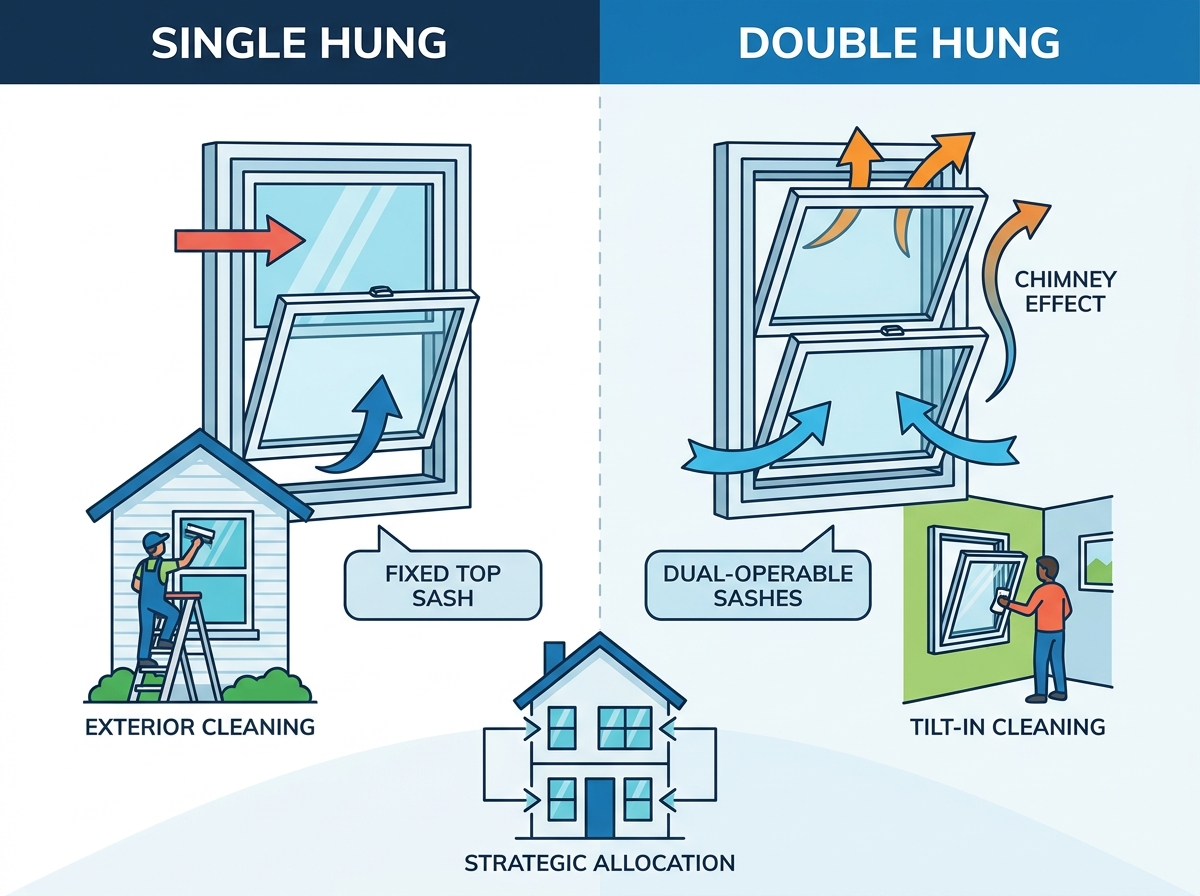
Cost vs. Function: Single hung windows cost 10–20% less upfront but require exterior access for cleaning; double hung windows offer tilt-in sashes for easy interior cleaning.
Airflow Dynamics: Double hung windows utilize the "chimney effect" (warm air escapes top, cool air enters bottom), making them vastly superior for natural ventilation.
Strategic Allocation: Project budgets can be optimized by installing single hung windows on the ground floor and reserving double hung units for upper levels.
Material Synergy: Upgrading to an aluminum double hung window pairs maximum operational flexibility with commercial-grade structural longevity and narrow sightlines.
Understanding the basic engineering differences between window types helps clarify their long-term performance. Both styles utilize vertically sliding sashes. However, they restrict movement in fundamentally different ways. This operational design dictates everything from weatherproofing to daily usability.
Single hung units feature a very straightforward mechanism. Only the bottom sash is operable. It moves vertically along the side jambs. The top sash remains permanently fixed and sealed in place at the factory. You cannot slide or tilt the top portion.
This simplicity offers a significant primary advantage. Fewer moving parts create a structurally tighter factory seal. The entire top half of the frame resists weather infiltration exceptionally well. Water and wind find fewer entry points at the top rail. Builders often prefer this fixed upper pane in areas facing harsh driving rain.
Common Mistake: Homeowners often assume single hung windows provide adequate cross-ventilation. You only get bottom-level airflow. They do not effectively exhaust hot air trapped near the ceiling.
Double hung units feature a more complex mechanism. Both the top and bottom sashes slide vertically. You can open the bottom, open the top, or open both simultaneously. Most modern iterations also include special latching hardware. This hardware allows both sashes to tilt inward.
This design unlocks variable ventilation options. You control exactly how air moves through the room. Furthermore, the tilt-in mechanism provides immediate interior access to the exterior glass. You can clean both sides of the window from inside your home. This feature drastically alters maintenance routines for multi-story properties.
Feature | Single Hung | Double Hung |
|---|---|---|
Operable Sashes | Bottom only | Top and Bottom |
Cleaning Access | Exterior only (top sash) | Interior tilt-in (both sashes) |
Ventilation Style | Direct bottom intake | Variable (top exhaust, bottom intake) |
Moving Parts | Minimal | Complex balance systems |
Evaluating window budgets requires looking past the initial sticker price. You must balance the immediate procurement costs against future property appraisals. We heavily advise assessing how functional upgrades impact overall residential value.
We first analyze the baseline cost delta. Single hung units are historically cheaper to source. Manufacturers spend less money producing them. They require simpler assembly lines and fewer hardware components. They omit upper balance springs and complex interlocking latches. This reduction in materials directly lowers the wholesale cost.
However, labor costs tell a different story. Installation labor is generally identical for both types. Framing crews prepare the same rough opening. They apply the same flashing tape and use identical shimming techniques. The physical installation time does not change. Therefore, the premium you pay for double hung units exists entirely in the material cost.
Material Base Cost: Single hung saves 10-20% per unit.
Hardware Cost: Double hung requires dual balancers and tilt latches.
Labor Cost: Identical across both operational styles.
Modern buyers heavily prioritize low-maintenance features. Real estate trends clearly show a preference for effortless upkeep. Whole-house double hung installations regularly appear as premium upgrades in residential real estate appraisals. Appraisers recognize the added functional value, especially in two-story homes.
You face a "Buy Once, Cry Once" reality. Upgrading your windows later costs exponentially more than choosing double hung units initially. Retrofitting requires tearing out interior trim, removing siding, and paying fresh labor fees. Paying a slight material premium during the initial framing stage protects your future resale value.
Second-story installations expose the most dramatic functional differences between window types. Gravity and height turn routine tasks into logistical challenges. Accessibility directly dictates how well occupants maintain the property over decades.
Single hung windows on upper floors present a massive maintenance headache. You cannot reach the exterior face of the upper sash from inside. Homeowners must use tall extension ladders to wash the exterior glass. Alternatively, they must hire expensive professional cleaning services twice a year. This ongoing cost quickly erodes any upfront savings.
Double hung windows solve this problem elegantly. They utilize tilt-in sashes. You simply unlock the sash, press the release latches, and tilt the glass inward. This transforms a hazardous, weekend-long chore into a safe, 10-minute interior task. You eliminate ladder falls and professional service fees entirely.
Best Practice: Always test the tilt-in mechanism during showroom visits. Some latching systems operate much smoother than others. You want hardware requiring minimal hand strength.
Safety considerations often drive the final purchasing decision. Toddlers and pets love looking out open windows. A standard lower sash opening poses a severe fall risk on upper floors. Standard screens do not prevent falls; they only keep insects out.
Double hung windows allow occupants to open only the top sash. This provides maximum ventilation while keeping the lower opening completely closed. Toddlers and pets cannot reach the upper opening. You prevent accidental falls without sacrificing fresh air. This specific feature offers unmatched peace of mind for young families.
Windows act as the primary thermal bridge in any building envelope. Their operational style dictates natural airflow and susceptibility to air leaks. You must evaluate how mechanical seams interact with local climate conditions.
Proper airflow drastically reduces reliance on mechanical air conditioning. Double hung windows create a phenomenon known as the "chimney effect." When you open both sashes simultaneously, physics takes over. Hot, stale air naturally rises and exhausts through the top opening. Simultaneously, heavier, cool air gets drawn indoors through the bottom opening.
This constant convective loop cools rooms much faster than single-opening windows. It effectively flushes stale indoor air. Single hung windows simply cannot replicate this thermodynamic process. They rely entirely on cross-breezes pushing air forcefully through the bottom opening.
We must acknowledge a common skeptical view in the building science community. Double hung windows possess more seams and moving tracks. More moving parts technically mean more potential failure points. If low-quality weatherstripping fails, these units become slightly more prone to draftiness than a fixed-top single hung. The top sash can sag slightly if not locked properly.
However, a clear mitigation strategy exists. Emphasize the importance of investing in high-quality interlocking meeting rails. Premium manufacturers design the top and bottom sashes to physically interlock when closed. This creates a labyrinth seal preventing air infiltration. Checking National Fenestration Rating Council (NFRC) labels ensures you purchase units rated for high wind loads.
Material selection drastically impacts how well dual-operable sashes perform over decades. For modern projects, upgrading to an aluminum double hung window pairs maximum operational flexibility with commercial-grade longevity. This specific combination solves many traditional fenestration complaints.
Combining dual-sash functionality with aluminum framing remains a top choice for modern and transitional residential projects. Moving sashes require rigid frames to maintain tight tolerances. Aluminum naturally resists the warping, twisting, and expansion that plagues vinyl over time. Vinyl frames expand heavily in direct sunlight. This expansion often binds the sliding tracks. Aluminum stays dimensionally stable, ensuring the tilt-latches and balance springs operate smoothly year after year.
Architects love aluminum for its unparalleled strength-to-weight ratio. This mechanical strength allows manufacturers to use much thinner frames. Thinner frames directly offset the bulkier mechanics usually required for dual-sash operation. You get maximum glass viewing area without sacrificing operable features. Wood and vinyl require thick, bulky profiles to support heavy glass. Aluminum provides a sleek, minimalist aesthetic matching contemporary design trends.
We must dispel outdated myths about aluminum heat transfer. Decades ago, metal frames conducted cold air directly into homes. This is no longer true for premium products. Modern residential aluminum units utilize advanced polyamide thermal breaks. These internal plastic bridges physically separate the exterior metal from the interior metal. They stop thermal bridging entirely. Today's thermally broken units routinely meet stringent residential energy codes and achieve high ENERGY STAR ratings.
Dimensionally stable against intense solar heat gain.
Maximizes natural daylighting via ultra-thin profiles.
Stops condensation using internal polyamide thermal breaks.
Supports heavier double-pane and triple-pane glass packages.
You do not have to choose one style for the entire house. Avoid the "all-or-nothing" trap. Mixing window types strategically across the elevation maximizes utility while protecting the budget. Smart allocation requires assessing the specific needs of each room.
We highly recommend single hung windows for ground-level rooms. You can easily clean them from the outside while standing safely on the lawn. They offer tighter weather seals against ground-level moisture and driving rain. The budget saved on the first floor can be reallocated to higher-end finishes elsewhere in the house.
You should strictly mandate double hung windows for upper floors. Safe cleaning becomes paramount at these heights. They eliminate ladder risks entirely. Furthermore, upper bedrooms trap rising heat from the first floor. The dual-sash cross-ventilation actively flushes this trapped heat out the top opening. This strategy dramatically improves sleep comfort during summer months.
Bathrooms and kitchens require rapid moisture control. We recommend dual-operable sashes here. You can open the top sash to rapidly exhaust steam from showers or cooking heat. Crucially, doing this prevents cold drafts blowing directly at counter-level. You keep occupants comfortable while venting damaging moisture out of the building envelope.
The choice between single and dual-operable sashes ultimately comes down to budget constraints versus long-term usability. Single hung units undoubtedly offer attractive upfront savings and excellent primary weather sealing. They serve perfectly for ground-floor applications where exterior access poses no risk. However, they drastically limit airflow and complicate upper-floor maintenance.
While single hung offers undeniable savings, the tilt-in cleaning and ventilation benefits of dual-operable sashes yield a superior residential experience. Leaving the top sash open provides safe, effective cooling that static top panes simply cannot match. Especially in upper-floor applications, the ease of interior cleaning pays massive dividends over the lifespan of the home.
Your next step requires careful project planning. Instruct your team to audit the entire floorplan room by room. Measure your rough openings accurately. Request side-by-side material quotes for both configurations from certified local installers. Mixing styles intelligently will give you the best structural performance without breaking the budget.
A: They have more mechanical parts, like balance springs for the top sash. This technically introduces more points of potential failure over decades. However, premium manufacturers use durable constant-force balances. Routine maintenance, such as keeping tracks clean and lightly lubricated, mitigates this risk entirely.
A: No. The frame and side jamb tracks are manufactured specifically for their operational style. A fixed upper sash lacks the necessary channels and hardware pockets for movement. You must replace the entire window unit, or at least perform a full pocket replacement, to upgrade.
A: Historically yes, because solid metal conducts temperature rapidly. However, modern thermally broken residential units completely solve this issue. They utilize internal structural plastics to decouple the exterior and interior metal frames. This thermal break prevents condensation and thermal bridging entirely, matching vinyl's efficiency.