
English
Views: 0 Author: Site Editor Publish Time: 2026-07-17 Origin: Site


A window’s performance is only as reliable as its weakest seal. Even premium multi-pane glazing fails at its primary job—maintaining the building envelope—if the window gaskets degrade, shrink, or lose their compression memory. For property managers, contractors, and homeowners evaluating drafts or moisture intrusion, understanding gasket mechanics is critical. You must grasp these underlying concepts before committing to expensive full-window replacements. Relying on ongoing temporary fixes simply delays inevitable structural issues. We know moisture intrusion accelerates wood rot and indoor mold growth. Drafts force your HVAC system into overdrive.
This guide breaks down how window gaskets dictate air and water tightness. We will explore the empirical signs of seal failure. You will also learn how to evaluate material options when specifying repairs or upgrades to ensure optimal building performance.
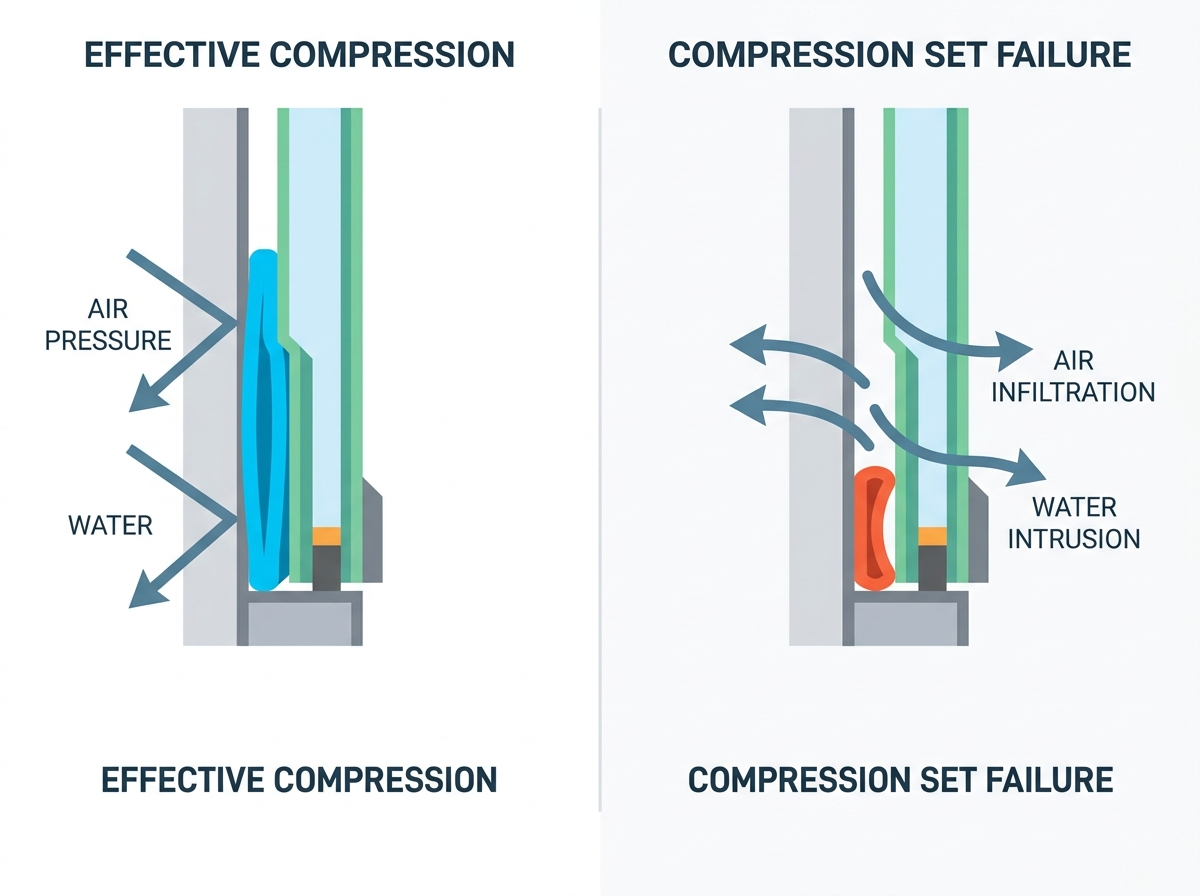
We rely on window gaskets to create a continuous barrier. Mechanical compression drives this physical defense. When you close a window, the sash presses tightly against the frame. This action squeezes the weatherseal material. The compressed material fills microscopic voids between hard surfaces. It effectively blocks thermal bridging. It also stops fluid ingress dead in its tracks. A successful seal depends on material rebound. The rubber must push back against the frame. This constant outward pressure ensures long-term tightness.
Buildings face constant wind load. Wind creates differential air pressure across the exterior envelope. High pressure pushes exterior air toward lower interior pressure zones. Weatherstripping manages this dynamic force. Primary seals block the main airflow path. Secondary seals catch residual breezes. If these barriers fail, outdoor air rushes inside. Your HVAC system then works harder to maintain room temperature. Effective window gaskets neutralize differential pressure completely. They eliminate drafts and stabilize indoor climate control.
Wind-driven rain creates severe hydrostatic pressure. Water actively searches for entry points. Capillary action pulls moisture into tiny crevices. High-quality seals interrupt this dangerous water path. They block direct rain exposure. More importantly, they manage water bypass. Some water always enters the outer window track. A well-designed gasket system guides this moisture downward. It directs fluid toward engineered weep holes. The weep holes drain water safely outside. This redirection protects your vulnerable interior drywall.
We must acknowledge a transparent assumption here. Weatherseals function strictly within a holistic system. A perfect seal cannot fix a poorly installed window. Structural frame settling creates uneven gaps. Warped sashes prevent uniform compression. Out-of-square frames render premium materials useless. The surrounding sealant must remain intact. Flashing tapes must shed water correctly. You must treat the entire window as an integrated assembly. Hardware, frames, and rubber components all share equal responsibility.
Materials degrade through steady environmental exposure. UV radiation and thermal cycling cause severe damage. Sunlight attacks the molecular structure of rubber. The material becomes increasingly brittle over time. Temperature fluctuations compound this issue. Heat causes the profile to expand. Freezing temperatures force it to contract. This constant movement weakens the structural integrity. Over several years, inferior plastics crack and split.
Compression set represents the ultimate failure point. We define compression set as permanent deformation. A new seal rebounds to its original shape. An aging seal flattens out permanently. It loses its vital spring-like memory. Once the material stays flat, microscopic gaps appear. These gaps allow air and water to penetrate freely.
You can identify failures through specific testing. Audible and draft testing provide immediate feedback. Listen closely to exterior noise transmission. Failing seals let street noise enter easily. You can also measure drafts directly. Use a thermal leak detector around the sash perimeter. Cold spots indicate broken air barriers. Smoke pens also reveal hidden air currents visually.
Water intrusion patterns tell a different story. You must distinguish between distinct leak types. Water pooling directly on the sill indicates weatherseal failure. The barrier failed to stop wind-driven rain. Conversely, water stains in the drywall suggest structural flashing leaks. Flashing leaks require extensive exterior wall repairs. Accurate diagnosis saves time and money.
Ignored failures generate compounding costs. Small drafts cause measurable baseline energy consumption increases. Your utility bills will climb steadily. Water leaks cause far more destruction. Localized mold growth begins within days of moisture entry. Wood rot destroys structural framing silently. Replacing rotted framing requires major demolition. Prompt gasket replacement prevents these cascading disasters. Proactive maintenance always costs less than reactive repairs.
Buyers and specifiers must weigh several critical factors. UV resistance determines outdoor survival. Extreme temperature flexibility ensures winter performance. Initial material costs influence project budgets. However, you must prioritize lifecycle longevity. Replacing cheap seals frequently costs more in labor. Evaluating these criteria helps you specify the right component.
| Material Type | UV Resistance | Compression Memory | Temperature Flexibility | Relative Cost |
|---|---|---|---|---|
| Standard PVC | Low | Poor | Stiffens in cold | Low |
| EPDM | Excellent | Excellent | Broad range | Moderate |
| Silicone | Outstanding | Outstanding | Extreme extremes | High |
| TPE / TPV | Very Good | Good | Good flexibility | Moderate |
PVC remains a highly cost-effective option. Builders use it heavily in budget-constrained applications. However, PVC relies on chemical plasticizers for flexibility. These plasticizers migrate out of the material over time. Sun exposure accelerates this chemical loss. The material ultimately shrinks and cracks. PVC exhibits poor compression memory in cold climates. It becomes rigid and fails to block winter drafts. We recommend PVC only for mild, forgiving climates.
EPDM stands as the industry standard for commercial applications. This synthetic rubber offers exceptional weatherability. It resists ozone and UV degradation effortlessly. EPDM maintains fantastic compression resistance over decades. It bounces back strongly against the sash. One minor drawback exists. Manufacturers typically produce EPDM only in black. Color matching light-colored frames proves difficult. Despite this, its durability remains unmatched for the price.
Silicone represents the absolute premium option. It delivers unmatched temperature stability. Extreme desert heat or arctic freezes do not phase it. The material stays completely flexible for decades. Silicone never shrinks or outgasses. You can also color-match silicone to any frame finish. It commands a notably higher price point. We specify silicone for extreme climates. High-exposure commercial facades also demand its superior performance.
TPE and TPV serve as modern hybrid solutions. They combine the best traits of plastics and rubber. These materials offer the heat-weldability of standard plastics. You can melt them to form perfectly seamless corners. Seamless corners eliminate corner leak vulnerabilities entirely. They also deliver the flexibility of rubber. They resist UV damage better than PVC. TPE shines in complex geometries demanding continuous tight bends.
We must frame this problem around energy loss. Compromised air sealing directly increases baseline HVAC loads. Heated air escapes through tiny gaps in winter. Air conditioning leaks outside during summer. We follow established thermodynamics principles here. Uncontrolled air exchange ruins indoor climate stability. The HVAC unit cycles on more frequently. It runs longer to compensate for the continuous loss. Replacing degraded window gaskets instantly cuts these hidden thermal losses.
Modern building codes demand strict energy efficiency. High-performance weatherseals make meeting these codes possible. ENERGY STAR ratings require rigorous airtightness thresholds. LEED certification rewards low energy consumption models. Passive house standards represent the ultimate benchmark. Passive houses require near-zero air infiltration. Standard PVC seals cannot pass these stringent blower door tests. You must use premium EPDM or silicone. Proper material selection guarantees compliance.
Evaluating return on investment requires a long-term view. Premium commercial-grade rubber carries a higher upfront cost. However, this investment yields immediate energy reductions. Monthly utility savings accumulate rapidly. You also eliminate deferred maintenance costs. You prevent water damage and wood rot entirely. The initial material premium pays for itself multiple times over. Proactive upgrades deliver measurable financial returns year after year.
Retrofitting makes perfect financial sense under specific conditions. You must inspect the existing frame first. The frame must remain square and plumb. All operable hardware must function smoothly. The hinges and locks cannot be bent. If these elements pass inspection, proceed with retrofitting. You can replace brittle or shrunken weatherseals easily. This targeted repair restores original performance at a fraction of replacement costs.
Certain dealbreakers render weatherseal retrofits useless. You must recognize these fatal flaws early. Warped PVC frames will never seal correctly. Rotted timber frames lack structural integrity. Widespread IGU gas leaks cause internal condensation. A new rubber seal will not fix failed glass units. In these scenarios, a new weatherseal acts as a mere band-aid. You must opt for a full window replacement.
Executing a successful retrofit requires careful planning. Sourcing proprietary profiles presents a major challenge. Manufacturers use highly specific extrusion shapes. You cannot use generic hardware store strips.
Consider these steps for a successful rollout:
On-site labor requires patience. Installers must avoid stretching the rubber during insertion. Stretched rubber shrinks back later and leaves gaps at the corners.
A: It depends on the design. Simple push-in friction fits install easily into pre-cut kerf channels. A handy homeowner can tackle this. However, complex wedge gaskets require specialized glazing tools and precise pressure. Stretching the material during installation causes future gaps. We recommend hiring a professional for complex commercial profiles.
A: Expect a lifespan of 10 to 25 years. The exact duration depends heavily on the material and UV exposure. Standard PVC might harden and shrink within 5 to 7 years. Premium materials like silicone and EPDM easily last over 20 years while maintaining strong compression memory.
A: No. Condensation between glass panes indicates a completely failed IGU (Insulated Glass Unit) edge seal. The inert gas has escaped. Removable weather gaskets only stop air and water from entering the room. You must replace the entire glass unit to fix inter-pane condensation.
A: Manufacturers use hundreds of proprietary profiles. You must remove a small, intact cross-section cutting from your frame. Use digital calipers to measure the base width, depth, and bulb size precisely. Match these exact measurements against commercial extrusion catalogs to find a suitable replacement.