
English
Views: 0 Author: Site Editor Publish Time: 2026-07-04 Origin: Site


Large glass surface areas often define modern architecture and bright interiors. However, they consistently act as massive thermal and acoustic weak points. This friction frustrates many homeowners and property managers. High-traffic neighborhoods and extreme weather conditions rapidly expose these vulnerabilities. You might initially try temporary, symptomatic fixes. Weatherstripping, heavy acoustic curtains, and DIY window films seem like affordable solutions. Yet, these methods fail to address the core structural deficiencies of standard glass.
You need a permanent, engineered intervention instead of simple bandages. This article provides an objective, data-backed evaluation framework. We focus specifically on upgrading to a double glazed sliding door. You will learn how to measure true performance gains accurately. We will guide you through complex metrics like STC ratings and U-values. Furthermore, we explore the physical realities of professional installation and framing requirements. Our goal is to help you secure measurable improvements in daily indoor comfort.
A properly specified double glazed sliding door can reduce perceived indoor noise by up to 50% compared to standard single-pane glass.
Thermal efficiency relies not just on two panes of glass, but on the inert gas fill (usually Argon), Low-E coatings, and thermal breaks in the frame.
Structural weight is a critical factor; upgrading requires assessing the existing track system and considering professional installation over DIY retrofits.
Evaluating STC (Sound Transmission Class) and U-values is essential for avoiding over-engineered or under-performing products.
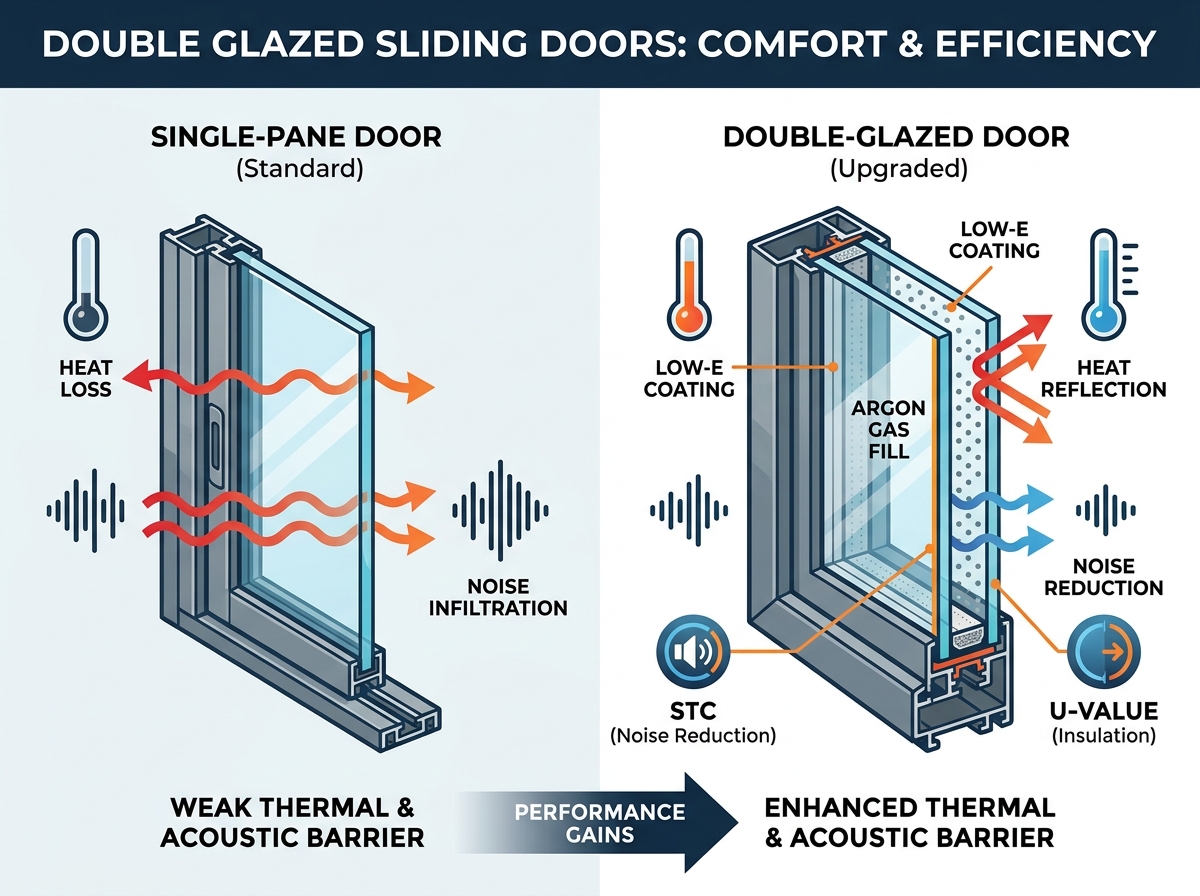
Traditional sliding doors suffer from profound structural vulnerabilities. We often refer to single-pane glass as the architectural "weakest link" in a building envelope. Standard glass creates an invisible vacuum for energy loss. It provides minimal density to block external sound waves. Furthermore, older sliding mechanisms rely on rudimentary brush seals. These seals degrade rapidly under UV exposure and friction. Consequently, they invite drafts, moisture, and street noise directly into your living space.
Faced with these annoyances, many people turn to homeowner forums for quick fixes. We frequently see recommendations for acoustic caulk or aftermarket tinting films. These DIY stop-gap measures rarely succeed. They fail because they cannot stop structural resonance. Sound waves simply vibrate through the thin glass pane and the surrounding aluminum frame. Similarly, sticking plastic film onto a window does not eliminate thermal bridging. The cold easily transfers from the outside environment through the single pane directly into your room.
Failing doors carry a significant lifestyle and business cost. Poor insulation leads directly to rising energy premiums. Your HVAC system works overtime just to maintain basic comfort levels. Compromised indoor comfort disrupts daily life. Home office environments suffer immensely from constant traffic noise or landscaping machinery. Remote work requires quiet, focused spaces. A poorly sealed door makes phone calls and video meetings highly frustrating. Upgrading your barriers becomes a functional necessity rather than a mere aesthetic choice.
You must understand industry-standard metrics to evaluate a new door properly. Manufacturers test glass units rigorously. Rely on these specific data points rather than vague marketing claims.
Sound Transmission Class (STC) measures how well a barrier attenuates airborne sound. A higher STC rating indicates better noise reduction. A standard single-pane door usually holds an STC rating around 25. Normal speech can be heard clearly through it. Upgrading your system pushes this rating much higher. An STC of 35 or above significantly muffles loud street traffic and barking dogs.
Acoustic double glazing requires precise engineering. You cannot simply use two identical sheets of glass. If you use two 4mm panes, they will vibrate at the exact same frequency. This creates a "coincidence dip" where certain sound pitches easily pass through. Instead, manufacturers use asymmetrical glass thicknesses. They might pair one 4mm pane with one 6mm pane. The varying densities disrupt different sound wave frequencies. This mismatch physically breaks the acoustic energy as it travels through the unit.
You must manage your acoustic expectations realistically. A double glazed sliding door offers exceptional noise reduction. However, no glass door provides absolute "soundproofing." Sound behaves like water; it finds the path of least resistance. Flanking noise can still enter through your walls, roof vents, or ceiling cavity. Expect a dramatic, peaceful difference, but do not expect recording-studio silence.
Thermal performance depends on stopping conductive heat transfer. The U-value measures how much heat escapes through the door. A lower U-value means superior insulation. Standard units have high U-values, wasting significant heating energy. Double glazing traps a layer of inert gas between the two glass panes. Manufacturers typically use Argon or Krypton gas. These gases are denser than regular air. They severely restrict the movement of thermal energy. A warm edge spacer separates the panes, preventing the edges from freezing.
Solar Heat Gain Coefficient (SHGC) is another vital metric. It measures how much solar radiation passes through the glass. A lower SHGC keeps your house cooler in the summer. Low-E (low-emissivity) coatings drastically improve this metric. Manufacturers apply microscopic metallic layers to the inside of the glass. During harsh summers, Low-E glass blocks scorching solar radiation from heating your floors. During freezing winters, it reflects your interior furnace heat back into the room. This dual-action coating maximizes year-round comfort.
Door Type | Average STC Rating | Average U-Value | Best Use Case |
|---|---|---|---|
Standard Single-Pane | 25 - 28 | 1.00 - 1.20 | Mild climates, low noise areas |
Standard Double Glazed (Symmetrical) | 31 - 33 | 0.30 - 0.50 | General energy efficiency upgrades |
Acoustic Double Glazed (Asymmetrical) | 35 - 40+ | 0.25 - 0.35 | High traffic zones, airport flight paths |
Upgrading glass changes the physical dynamics of your entryway. You cannot ignore the structural framework. Double glazing involves thick glass, heavy spacer bars, and dense frames. You must account for this added mass.
Managing increased weight represents the biggest physical reality of this upgrade. A large dual-pane unit often weighs twice as much as older single-pane doors. Standard plastic rollers will crush under this extreme pressure. They will flatten out, making the door impossible to slide. Heavy-duty hardware is absolutely mandatory. Look for heavy-duty, stainless steel tandem rollers. These distribute the vast weight evenly. The bottom tracks also require heavy-gauge reinforcement to prevent warping over time.
A door is only as effective as its perimeter seals. The best glass in the world fails if cold air blows through the frame. You need robust sealing systems. Look for interlocking stiles where the sliding panel meets the fixed panel. High-quality multi-chambered uPVC or thermally broken aluminum frames provide excellent insulation. They feature internal pockets that trap air and block cold transfer. Additionally, insist on premium compression weather seals. These rubberized gaskets squash tight when closed, effectively stopping aggressive air drafts and water infiltration.
Modern glass units inherently improve forced-entry resistance. Security upgrades happen automatically when you ditch flimsy glass. Building codes require toughened (tempered) or laminated safety glass in modern double glazing. Laminated glass features a tough plastic interlayer between the panes. If a burglar strikes it, it splinters but remains rigidly in the frame. To maximize this structural strength, you need advanced multi-point locking mechanisms. These systems secure the door into the jamb at three or four separate vertical points. A single latch simply cannot provide adequate security for premium doors.
Homeowners often debate how extensively they should modify their property. You generally have two distinct installation paths. Each carries different risks, benefits, and structural implications.
Glass retrofitting involves insert replacement. You keep the existing aluminum or timber frame intact. Installers remove the old single pane and insert a slimline double-glazed unit. This method appeals to many because it causes less interior mess. However, it harbors severe limitations. You face immense risks if your older frames are warped out of square. Aging, brittle tracks simply cannot support the immense weight of the new dual-pane units. The extra weight will rapidly destroy the old hardware. Furthermore, if the old frame lacks thermal breaks, cold air will still bypass your expensive new glass. Retrofitting often negates the promised acoustic and thermal benefits entirely.
Full frame replacement stands as the undisputed standard for maximum performance. Installers extract the entire old door system right down to the house studs. They install a brand-new, factory-calibrated frame and glass package. This method maximizes your structural integrity. It allows installers to ensure proper waterproof flashing. They can expand the opening, realign the sill, and seal gaps according to strict local building codes.
Full replacement obviously creates more disruption. The required timeline extends longer than a simple glass swap. You might need minor drywall or trim repairs afterward. However, eliminating hidden rot and achieving a perfect air seal justifies the temporary construction mess.
Purchasing architectural glass requires methodical planning. Treat this process like an engineering project rather than a simple retail transaction. Use this framework to secure the best product.
Define Success Criteria First: You must prioritize your main goal before shopping. Are you trying to mitigate deafening highway noise? Do you need to drastically lower extreme winter heating bills? Perhaps you must meet strict local building compliance for bushfire ratings or high-wind zones. Prioritizing helps you choose between acoustic asymmetrical glass or extreme Low-E thermal coatings.
Verify Testing Certificates: Never accept verbal promises regarding performance. Look for verifiable testing certificates from authoritative bodies. In many regions, the National Fenestration Rating Council (NFRC) or local equivalent provides standardized labels. These labels independently confirm the U-value and SHGC.
Demand Transparent Warranty Terms: Read the fine print carefully. Top-tier manufacturers back their engineering. Demand warranties that explicitly cover critical seal failure or internal fogging. The warranty must also cover the heavy-duty rolling hardware and tracks, not just the glass itself.
Watch for Unrealistic Guarantees: Avoid contractors who promise unrealistic outcomes. If a salesperson guarantees "100% noise elimination," walk away immediately. Trust installers who explain flanking noise and provide honest STC estimates.
Upgrading to a double glazed sliding door represents a high-value capital improvement. It is a vital architectural intervention, not a mere cosmetic fix. You are physically altering how your home handles heat transfer and acoustic energy. Temporary measures like curtains and weatherstripping only delay the inevitable need for structural upgrades.
Optimal results require a delicate balance. You must harmonize precise glass specifications, robust frame integrity, and flawless professional installation. Do not cut corners by mounting heavy acoustic glass into rotting, single-pane tracks. Invest in heavy-duty stainless rollers, multi-point locks, and thermally broken frames to guarantee longevity.
Your next step requires practical action. We encourage you to schedule a professional site assessment. Let certified installers measure your current frames, assess your structural tracks, and discuss your specific STC and U-value requirements. Taking this proactive step ensures a quieter, infinitely more comfortable living space.
A: External condensation is normal and indicates excellent insulation. It means the outer glass is cold while your interior remains warm. However, condensation between the two panes signals a critical failure. If moisture fogs the inside gap, the perimeter seal has broken. The insulating gas has escaped, and you must replace the glass unit entirely.
A: Complete soundproofing is impossible without structural changes. Heavy acoustic curtains and draft stoppers help absorb minor echoes. They slightly muffle high-frequency noises. However, they cannot block low-frequency traffic rumbles. Standard single-pane glass lacks the density to stop sound wave transmission. Real noise reduction requires upgrading to asymmetric double glazing.
A: A double glazed unit easily weighs twice as much as a single-pane door. The secondary glass pane and dense spacer bars add immense mass. Because of this extreme weight, you cannot use standard plastic rollers. The system requires high-grade stainless steel tandem rollers and reinforced track systems to prevent catastrophic hardware failure.
A: They do not require complex maintenance, but routine care is vital. You must keep the bottom track completely free of dirt and pet hair to protect the heavy-duty rollers. Periodically lubricate the rollers and multi-point locking mechanisms with a silicone-based spray. Finally, inspect the rubber compression weather seals annually for tears or hardening.