
English
Views: 0 Author: Site Editor Publish Time: 2026-07-13 Origin: Site


The cranked out aluminum window often carries a polarized reputation in the building industry. You might picture mid-century historical homes suffering from winter drafts and excessive condensation. Today, engineers have completely reinvented these fixtures for modern, high-performance architecture. Buyers often face a tough dilemma at the bottom of the purchasing funnel. You want the sleek sightlines and incredible structural durability of aluminum. However, you might worry about mechanical hardware failure, poor energy efficiency, and thermal bridging. This guide provides an objective, spec-driven framework. We will help you evaluate, specify, or replace your existing units confidently. You will learn exactly what makes these modern mechanisms a reliable choice. Read on to discover how to align window specifications seamlessly against modern building codes.
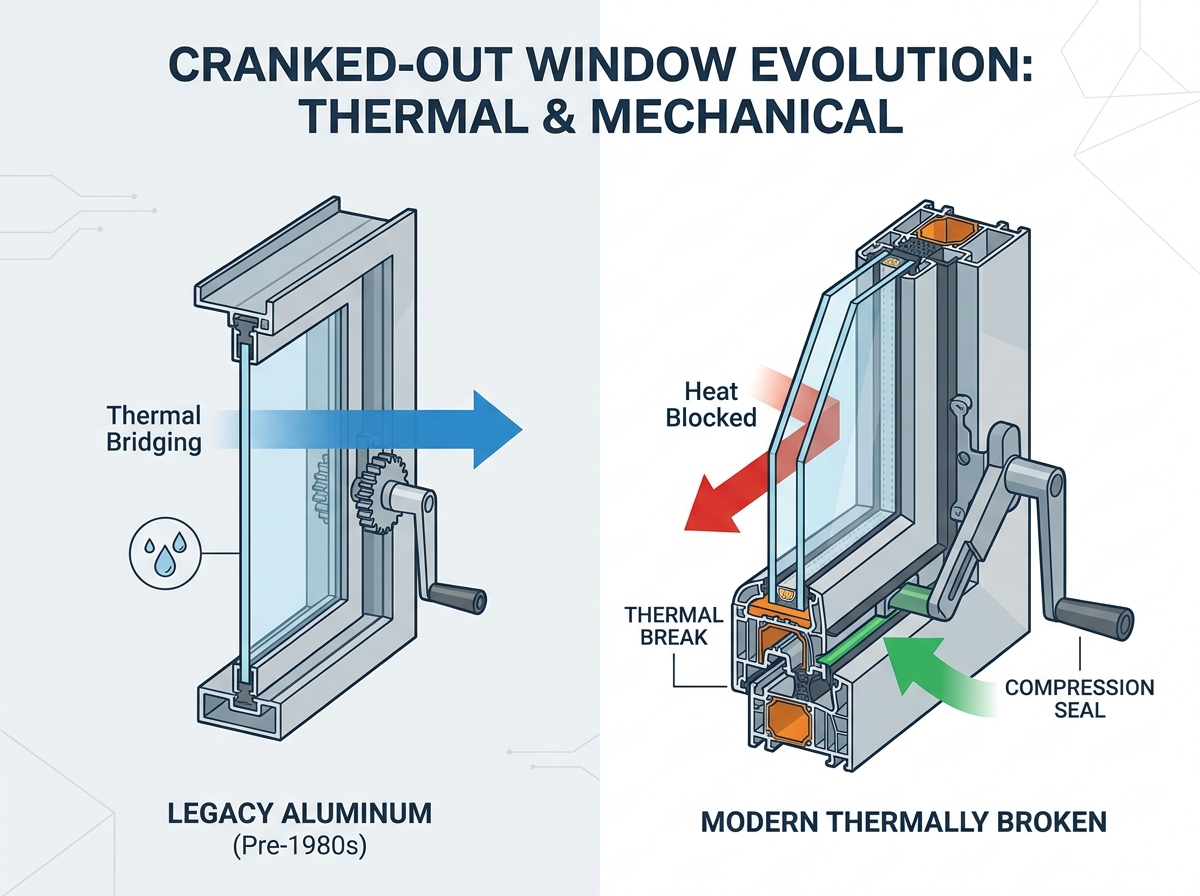
Many homeowners associate aluminum windows directly with the mid-century building boom. Builders in the 1950s prioritized cheap, rapid manufacturing. Those original frames conducted cold air straight into the home. They caused massive condensation issues during winter months. Today, a modern cranked out aluminum window bears little resemblance to its flawed predecessors. Manufacturers now use highly engineered, extruded aluminum profiles. These thick extrusions provide immense structural rigidity while accommodating heavy, triple-pane glass.
Thermal bridging used to be the biggest drawback of metal frames. Aluminum conducts heat exceptionally well. This means extreme exterior temperatures easily transfer inside. Building scientists solved this problem using thermal breaks. Manufacturers insert rigid polyamide struts between the interior and exterior aluminum components. This strut physically separates the metal pieces. It halts the transfer of thermal energy entirely. Consequently, thermally broken aluminum frames achieve excellent U-values and Solar Heat Gain Coefficient (SHGC) ratings. They now easily pass strict regional energy codes.
The operating mechanism defines the physical performance of these units. A rotary operator works seamlessly in tandem with multi-point locking systems. When you turn the crank handle, the sash extends outward. When you close the unit, the locks engage multiple points along the frame simultaneously. This action pulls the sash tightly against continuous weather stripping. It creates a highly superior, airtight compression seal. This compression seal blocks out wind, rain, and street noise far better than traditional sliding windows.
Choosing between a crank-out and a push-out window changes how you interact with your home. Ergonomics play a massive role in this decision. A crank mechanism offers a distinct functional advantage through mechanical leverage. You simply rotate the handle to move massive, heavy glass panels. This proves especially vital for windows installed over deep kitchen counters or bathtubs. Pushing a heavy sash outward requires leaning and extending your arms. Cranking requires minimal effort and simple wrist rotation.
Screen placement also differs drastically between these two styles. Crank-out units swing the sash outward while keeping the interior opening clear. This allows you to install fixed interior screens. These screens stay in place year-round. They keep bugs out perfectly during operation. Push-out windows swing outward through the screen plane. Therefore, they require retractable screens. Retractable screens cost significantly more. They also contain fragile tension springs. These springs frequently jam or tear after a few seasons of heavy use.
You must also assess mechanical wear honestly. Every operating style has specific failure points. Rotary cranks contain internal metal gears. If a sash freezes shut in winter, forcing the handle can strip these gears. Dirt in the sliding track also strains the operator. Conversely, push-out units rely on simpler friction hinges. Friction hinges lack internal gears, but they loosen over time. Strong winds can blow a push-out window shut if the hinges lose their tension. Regular cleaning prevents premature wear in both systems.
| Feature | Crank-Out Mechanism | Push-Out Mechanism |
|---|---|---|
| Ergonomics | High leverage; excellent for heavy glass and hard-to-reach areas. | Requires leaning and physical pushing; difficult over counters. |
| Screen Type | Fixed interior screens (reliable, cost-effective). | Retractable screens (expensive, prone to jamming). |
| Wear Risks | Stripped internal gears if forced; track debris. | Hinges lose tension over time; wind closure risks. |
| Seal Quality | Excellent compression via multi-point locks. | Relies on manual locking pressure; generally good. |
Evaluating commercial-grade aluminum windows requires looking beyond the basic aesthetics. You need a structured approach to analyze the technical specifications. Use the following criteria to evaluate any potential window purchase.
Homeowners frequently wonder whether to repair or replace their aging aluminum units. Diagnosing hardware failures correctly saves thousands of dollars. Sometimes, a window feels impossible to open. You might assume the entire frame has failed. Often, the window simply needs a new rotary gear. You can easily clean out a debris-filled track using a stiff brush and silicone spray. If the sash operates smoothly but the handle spins freely, the internal spline is stripped. Replacing the operator handle takes ten minutes. Full sash replacement is only necessary if the actual frame warps or the glass seal fails.
Surface maintenance presents a unique, long-tail challenge. Legacy aluminum frames oxidize and pit over decades of weather exposure. Painting them requires meticulous preparation. You cannot simply brush standard latex paint over oxidized metal. You must use mechanical surface abrasion to remove the chalky oxidation. Next, apply a high-quality DTM (Direct to Metal) primer. This ensures proper adhesion. Many homeowners undertake this laborious process specifically to match modern exterior trims, like new brown gutters or dark fascias.
Building science provides clear insights regarding the retrofit return on investment (ROI). Adding exterior storm windows to 1960s single-pane aluminum units improves draftiness slightly. However, it rarely solves interior condensation or severe thermal bridging. The metal frame still conducts cold. Investing in full tear-outs yields significantly better performance. Installing modern thermally broken replacements stops the thermal transfer completely. This approach fundamentally alters the comfort level of the room. It also protects your drywall and window sills from long-term moisture damage.
Modern metal frames fit specific architectural goals perfectly. They excel in environments demanding durability and clean lines. Understanding their ideal applications ensures you maximize their unique benefits.
A modern cranked out aluminum window represents a premium investment for your property. It serves as the ideal solution for contemporary designs requiring massive glass panels, airtight weather seals, and incredibly minimal sightlines. The stigma of drafty, mid-century metal frames no longer applies. Today, manufacturers rely on advanced polyamide thermal breaks to guarantee energy efficiency. They pair these rigid frames with heavy-duty mechanical hardware to ensure decades of smooth operation.
Success ultimately depends on careful specification and precise installation. We encourage you to consult with certified installation professionals. Have them audit your current rough openings thoroughly. Compare high-end thermally broken aluminum specifications against your overall project budget. By prioritizing structural integrity and high-quality hardware, you will secure an elegant, long-lasting fenestration upgrade for your home.
A: Modern units are not drafty at all. Legacy single-pane frames from the mid-century lacked thermal breaks, making them notoriously cold. Today, manufacturers use continuous polyamide thermal breaks and multi-point locking mechanisms. These locks pull the sash tightly against heavy weather stripping, creating an incredibly airtight compression seal.
A: High-quality crank mechanisms typically last 15 to 20 years with proper maintenance. Cleaning the tracks and lubricating the hinges annually extends their lifespan significantly. The primary risk is stripped gears, which usually happen when users force the handle while the window is frozen or stuck.
A: Yes, you can easily replace the crank handle and the internal rotary operator. The industry relies on universal spline sizes for most aftermarket parts. You just need to remove a few screws, swap out the gear box, and attach a new handle to restore full function.
A: Some users dislike them because the interior handle can interfere with tight-fitting blinds or shades. Additionally, the outward-swinging sash obstructs exterior walkways or patios. Finally, some homeowners prefer the traditional aesthetic of sliding double-hung units over the mechanical look of rotary cranks.