
English
Views: 0 Author: Site Editor Publish Time: 2026-07-25 Origin: Site


Heavy, wind-driven rain quickly exposes the critical vulnerabilities hidden inside standard aluminum window profiles. You will often notice track pooling and structural leaks during severe storms. These unseen failures cause significant property damage and disrupt your peace of mind. Water intrusion ruins drywall, warps flooring, and encourages dangerous mold growth. You must understand one engineering reality clearly. "Waterproof" is an unrealistic absolute in modern fenestration design. Complete weather-tightness relies entirely on controlled water management, pressure equalization, and rapid drainage. You cannot depend on aesthetic marketing claims alone. Architects and builders know this limitation well. This article provides an actionable, component-level evaluation framework. We will help you verify the true weather-tightness of rainproof aluminum windows before you finalize any purchase or project sign-off. You will learn how to inspect core components accurately. We will teach you to evaluate drainage systems and mitigate installation risks effectively. Protect your investment properly.
Wind-driven rain creates immense force against your building facade. This relentless wind generates severe hydrostatic pressure. It pushes water uphill into tiny window tracks. Standard weatherstripping easily collapses under this sustained aerodynamic force. Water bypasses the primary seals and enters your living space. Gravity normally pulls rainwater safely downward. However, intense wind pressure reverses this natural directional flow. Understanding this dynamic helps you identify why standard units fail during storms. The pressure literally drives moisture through microscopic gaps.
Horizontal sliding mechanisms frequently fail during heavy storms. They contain inherent design vulnerabilities. Wind forces dirt and debris into the lower tracks constantly. This debris blocks crucial drainage channels over time. It creates powerful capillary action inside the frame. Water wicks upward into the internal aluminum extrusions. It eventually breaches the interior sill and damages your walls. Compression-sealed awning or casement types perform much better in wet regions. They compress tightly against the master frame when the wind blows. The storm actually reinforces their primary weather seal.
You must also acknowledge seal degradation realities. Sun exposure and severe temperature fluctuations destroy basic rubber materials. Ultraviolet rays harden standard PVC seals over time. The seals lose their vital elasticity. They become brittle and shrink away from the glass. Micro-gaps form around the entire frame perimeter. Water easily penetrates these invisible cracks during the next storm. You need highly resilient materials to stop this chemical degradation. Upgrading your materials is non-negotiable for extreme weather zones.
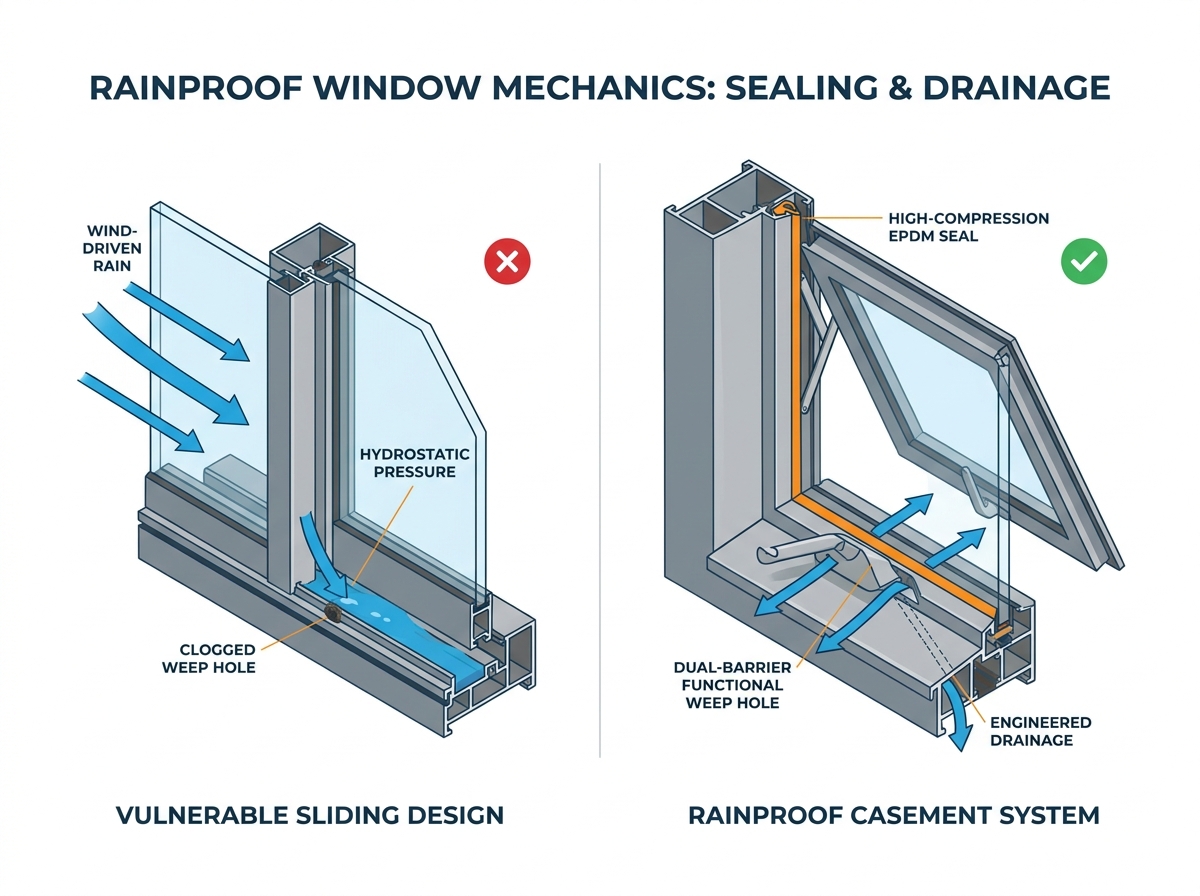
Standard industry criteria clearly reject basic PVC gaskets. They shrink, crack, and fail prematurely under thermal stress. You must demand EPDM (Ethylene Propylene Diene Monomer) or premium silicone gaskets. These advanced elastomeric materials retain their long-term compression memory. They bounce back to their original shape after opening. They also offer superior UV resistance against harsh sunlight. You can trust them to maintain a watertight seal for decades. Insist on checking the material specifications sheet before buying.
Modern aluminum profiles rely heavily on polyamide thermal breaks. They serve a vital dual purpose. They famously prevent internal condensation and frame sweating. However, they also act as physical moisture barriers. They cleverly separate exterior water channels from interior room profiles. Rainwater cannot bridge this engineered structural gap. It remains trapped in the exterior drainage chamber. The polyamide material blocks thermal transfer and stops capillary water movement simultaneously.
Corners represent the weakest structural points in any window frame. Evaluate welded versus mechanically joined corners very carefully. Mechanically joined corners require meticulous sealing protocols during factory assembly. Look closely for injected sealant in the corner cleats. Manufacturers pump specialized epoxy into these joints. This precision injection prevents capillary leaks at vulnerable intersection points. Welded corners eliminate this gap entirely but often cost more. You should physically inspect showroom corner samples.
| Component Material | Weather Resistance | Lifespan Expectancy | Recommendation Status |
|---|---|---|---|
| Standard PVC | Low (Hardens under continuous UV exposure) | 3-5 Years | Reject for rainy climates |
| Commercial Silicone | High (Remains flexible in freezing cold) | 15+ Years | Acceptable alternative |
| EPDM Rubber | Very High (Superior compression memory retention) | 20+ Years | Highly Recommended |
You must assess weep hole size and placement during your inspection. Ensure manufacturers size them adequately to handle sudden torrential downpours. Tiny punch holes only manage light morning drizzle. They clog easily with dust during heavy storms. Evaluate concealed versus exposed drainage systems carefully. Concealed systems look much better aesthetically from the outside. However, they must feature one-way weep hole covers or flaps. These small mechanical flaps prevent strong winds from blowing water back inside. They open only when internal water pushes outward.
You should verify the extrusion profile directly. It must feature an integrated, outward-sloping sill. This precise angle relies on natural gravity for rapid water removal. You cannot rely solely on internal pressure equalization. A sloped sill physically forces pooling water out of the track. It prevents standing water from degrading the lower seals. Flat sills invite absolute disaster in rainy regions. Gravity remains your most reliable drainage tool.
Look deep inside the aluminum frame profile. Check for complex internal routing mechanisms. Engineers design these hidden baffles to guide water away. They divert moisture from the thermal break and glass edge. They also protect your steel structural anchors from hidden rust. Good baffling ensures water flows directly toward the exterior weep holes. It creates a predetermined exit path. This path isolates the water entirely from the interior drywall.
You need verifiable laboratory data before buying any high-end window unit. Do not rely on showroom sales pitches. Demand hard performance numbers from independent testing agencies.
Installation flaws will destroy even the best engineering designs. You must control the installation process rigorously to prevent leaks.
Read the fine print on every fenestration contract. Protect yourself from hidden clauses and unreasonable exclusions.
You must differentiate between minor maintenance issues and total systemic failures. A clogged weep hole requires routine cleaning. You can clear it easily with simple tools. However, warped aluminum extrusions demand immediate full replacement. The frame will never seal correctly again. Failed corner seals also signal the absolute end of a window's life. Water trapped inside the hollow frame causes unseen structural damage. It silently rots the surrounding wood framing. Use moisture meters to detect invisible wall damage early.
Assess the true financial viability of field repairs. Replacing old gaskets sometimes makes immediate financial sense. Adding aftermarket weatherstripping offers a cheap, temporary fix. However, these stopgaps rarely survive major hurricane-level storms. Investing in modern, pressure-equalized rainproof aluminum windows provides permanent, long-term security. The upfront capital cost effectively offsets future catastrophic water damage repairs. A patched window will eventually fail again during extreme weather.
Choose your manufacturing suppliers wisely. Shortlist vendors who provide detailed cross-sectional profile models. These 3D models demonstrate their exact internal drainage paths. Do not rely solely on showroom aesthetics or glossy brochures. A visually beautiful window fails quickly if it lacks engineered water management. Ask vendors to explain their specific water penetration testing methods. Reject suppliers who evade technical engineering questions. True experts will proudly showcase their drainage engineering.
Purchasing robust, weather-tight window units is a direct investment in risk mitigation. You actively protect your valuable property from devastating, hidden water damage. Component quality and installation rigor hold equal weight in this ongoing battle. EPDM compression seals and sloped aluminum sills actively prevent water ingress. Continuous sill pans and precise perimeter sealing ensure long-term structural integrity.
Take these immediate next steps to secure your building. Use the provided component checklist during all your upcoming vendor consultations. Demand specific Water Penetration Resistance ratings before finalizing any purchase contracts. Always hire certified installers who are highly experienced in continuous sill pan flashing techniques. Protect your home by making informed, data-driven engineering choices today.
A: Minor track water is completely normal for pressure-equalized designs. The system manages this water safely, provided it drains rapidly through designated weep holes. However, if water spills over the interior track, you have an issue. The weep holes are likely clogged with debris or improperly sized.
A: You should establish a practical bi-annual maintenance baseline. Inspect them every spring and right after heavy autumn leaf-fall. Use a safe clearing method to avoid damaging the internal plastic baffles. A quick blast of compressed air or a thin, flexible wire works perfectly.
A: Yes, outward-opening casement windows offer superior water resistance. Their unique design leverages the actual severe weather conditions. When wind events occur, the wind pushes the window sash inward. This action causes direct, forceful seal compression against the sturdy outer frame.
A: No. Exterior caulking only addresses superficial perimeter leaks between the wall and the frame. It absolutely cannot fix internal profile drainage failures. It will not repair deteriorated EPDM gaskets or broken thermal breaks. Adding more exterior sealant often traps water inside permanently.