
English
Views: 0 Author: Site Editor Publish Time: 2026-08-31 Origin: Site


Securing premium architectural glazing represents a massive financial commitment for any global construction project. However, the most advanced window systems easily become useless upon delivery. They offer zero value if they arrive scratched, shattered, or warped. International procurement carries incredibly high stakes. One damaged ocean shipment can rapidly derail an entire building timeline. Trans-oceanic shipping consistently exposes delicate cargo to rigorous and unpredictable physical demands. Shipping containers endure rough forklift handling at multiple port transfer stations. They also face severe turbulent shifts across rough high seas. Extreme temperature fluctuations create harsh internal container climates. These brutal conditions easily compromise fragile glass units and precision-engineered metal profiles. This article provides a transparent, decision-grade framework to evaluate supplier reliability effectively. We will unpack exactly what standard of aluminum window packaging you must require before finalizing an export order. You will discover how to audit factory packing protocols confidently. We also explain how to navigate international customs compliance smoothly. Ultimately, this guide helps you eliminate transit damage risks entirely.
Improper stacking creates severe threats during international transit. Lack of rigid structural support causes heavy metal profiles to warp. Ocean freight subjects cargo to continuous pitching and rolling motions. These relentless forces transfer directly into delicate goods. Once torsion sets in, installers cannot fit frames into designated wall openings. You inevitably hold ruined, un-installable construction materials.
High-seas turbulence introduces constant, violent vibration. Forklift operators occasionally mishandle heavy crates during rapid port transfers. Inadequate shock absorption shatters insulated glass units instantly. It also leaves deep gouges across expensive powder-coated surfaces. One dropped crate can destroy thousands of dollars in premium glazing. Standard domestic shrink wrap offers absolutely zero protection against these violent impacts.
Temperature shifts present another invisible hazard. Cargo vessels pass through rapidly changing global climate zones. Extreme temperature swings create "container rain" inside closed steel boxes. Heavy condensation drips directly onto unprotected cargo below. You need proper moisture barriers and specialized desiccants inside every crate. Otherwise, sensitive locking hardware and exposed finishes quickly corrode. Water damage ruins architectural aesthetics permanently.
The ultimate financial penalty for damage is severe. Replacement manufacturing takes many weeks. Global shipping adds several extra months to project timelines. Delayed construction milestones trigger massive contractor penalties. These immediate financial hits severely impact project profitability. Proper export crating mitigates every single transit risk. It functions as essential insurance for your physical assets.
Transit Damage Risk Matrix
| Failure Type | Primary Cause | Project Impact |
|---|---|---|
| Frame Torsion | Improper vertical stacking | Units cannot be installed |
| Glass Breakage | Inadequate shock absorption | Total unit replacement required |
| Hardware Corrosion | Container condensation | Compromised locking mechanisms |
| Surface Gouging | Metal-on-metal friction | Failed architectural inspections |
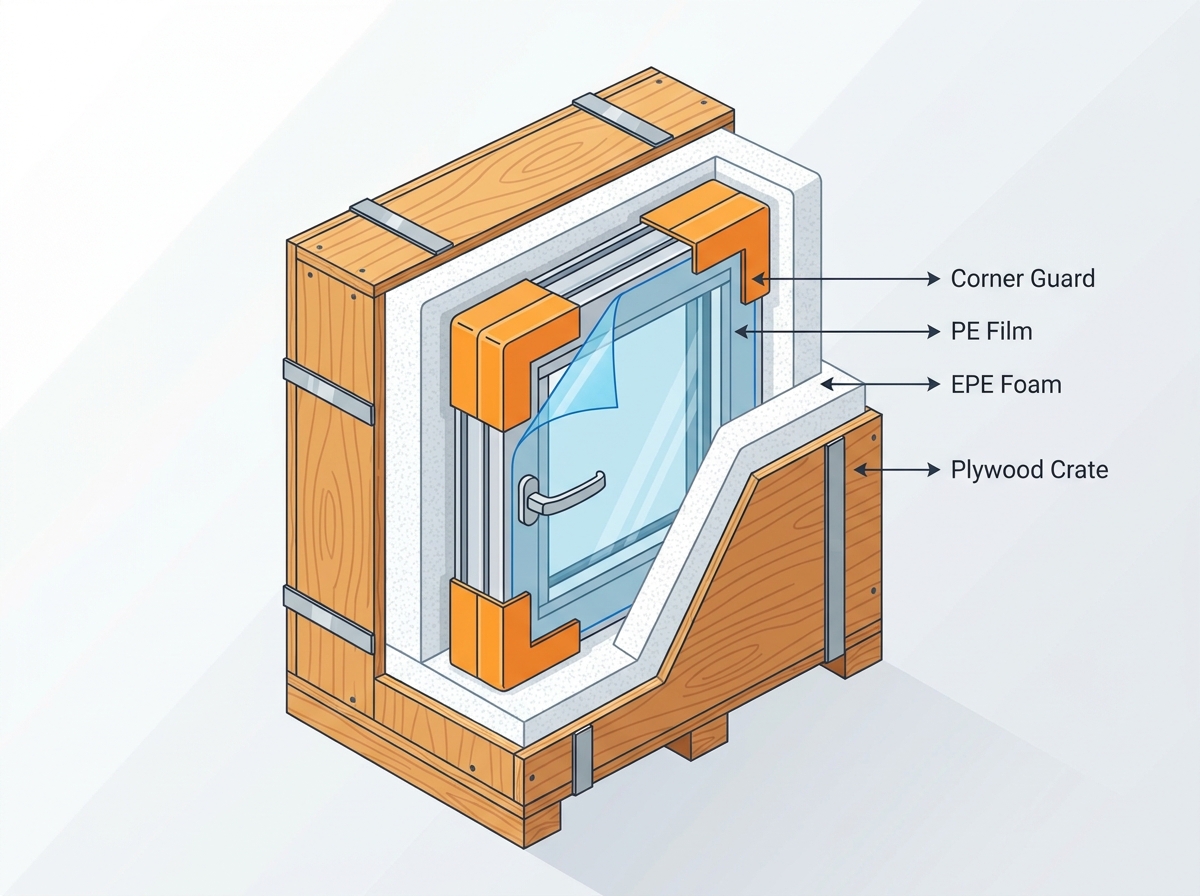
Effective export security begins exactly at the component level. Manufacturers must apply non-residue PE (Polyethylene) protective film. They stick this film directly onto raw aluminum profiles. This specific material adheres tightly during turbulent ocean transit. It peels away cleanly upon final site installation. Avoid cheap PVC films entirely. PVC often leaves sticky chemical residues under high tropical heat. Cleaning this residue wastes valuable contractor hours.
Workers must also securely pad all protruding mechanical hardware. Wrapping window handles prevents metal-on-metal scratching. Intense ocean vibrations cause unprotected handles to scrape against adjacent glass panes. Technicians use soft fabric sleeves to isolate every metal component. This meticulous primary layer defends against microscopic surface abrasions.
Corner joints endure the absolute highest stress levels during lifting. Premium suppliers apply rigid cardboard or heavy-duty plastic corner protectors. These specialized guards absorb sudden impact shocks effectively. They prevent delicate mitered joints from cracking open under pressure. You cannot skip corner protection on oversized commercial glazing.
Next, the entire assembled frame requires comprehensive soft wrapping. Workers encase each individual unit using EPE (Expanded Polyethylene) foam. EPE features a highly resilient closed-cell structure. It bends flexibly around complex metal extrusions without snapping. Some facilities prefer heavy-duty air bubble film instead. Both materials provide excellent impact resistance. They create a reliable cushion against internal crate collisions.
Outer crating dictates whether your shipment survives the journey intact. You have two primary structural options depending on order volume. We highly recommend fully enclosed plywood crates for LCL (Less than Container Load) shipments. LCL cargo shares tight space alongside unpredictable heavy goods. Fully enclosed plywood creates an impenetrable outer shell. It completely shields delicate glass from mixed-cargo hazards.
Steel or iron pallets utilize robust U-channel architectural structures. They serve as the ideal choice for FCL (Full Container Load) orders. Steel pallets offer exceptional rigidity for heavy vertical stacks. They also maximize available internal container space highly efficiently. Forklifts can maneuver these metal pallets swiftly during port loading. Solid steel frameworks prevent heavy windows from leaning or crushing.
Customs officials rigorously inspect incoming timber packaging daily. Global trade regulations mandate strict ISPM-15 certification for solid wood. This crucial rule prevents international pest cross-contamination between continents. Heat-treated or chemically fumigated wood must display clear verification stamps. If customs agents find uncertified wooden pallets, they react aggressively. They quarantine your shipping container immediately. You face massive delay fees and port storage penalties.
Smart suppliers bypass these strict timber fumigation delays entirely. They utilize engineered plywood instead of raw natural lumber. Plywood undergoes intense heat and pressure during factory manufacturing. This industrial process exempts it from ISPM-15 restrictions automatically. Using engineered wood guarantees smooth customs clearance at destination ports.
Weight regulations also demand your strict professional attention. The maritime industry enforces Verified Gross Mass (VGM) rules globally. A reliable supplier precisely calculates packaging weights before dispatching trucks. Accurate VGM data ensures safe crane lifting at busy ports. It directly prevents container rejection during vessel loading procedures.
Clear labeling protocols streamline your busy site operations. Workers need immediate visual guidance to handle crates safely. Every export crate requires specific external safety markings. QR integration drastically improves project site sorting efficiency. Foremen scan codes to identify specific window dimensions instantly. They avoid opening sealed crates prematurely in harsh weather.
Loading strategy represents your absolute final defense against damage. Poor weight distribution leads directly to catastrophic frame distortion. Shippers constantly balance internal space optimization against cargo safety. Maximizing the number of units per container reduces shipping rates. However, packing units too tightly causes severe problems. It leaves inadequate space for secure protective lashing. You must prioritize secure bracing over maximum density.
Container Loading Optimization Chart
| Loading Metric | High-Density Focus (Risky) | Safety-First Focus (Recommended) |
|---|---|---|
| Unit Spacing | Zero gaps between crates | Strategic gaps for airbags |
| Weight Distribution | Randomized placement | Heavy units secured at base |
| Lashing Method | Minimal thin ropes | Heavy-duty nylon ratchet straps |
| Floor Anchoring | None applied | Nailed wooden floor chocks |
Professional workers employ sophisticated lashing and bracing techniques. They utilize heavy-duty nylon straps to anchor crates firmly. Wooden chocks nailed into the container floor prevent base sliding. Pneumatic dunnage airbags fill empty voids between metal pallets. These specialized airbags absorb massive compressive lateral forces. They successfully prevent longitudinal movement during turbulent ocean swells. Properly braced cargo never shifts during transit.
Sequential loading is another highly critical implementation reality. Foremen must organize the loading sequence logically. They stack heavier curtain wall components carefully at the bottom. Lighter casement windows sit safely on top. Advanced suppliers load containers by specific project phase. They place Phase One windows nearest the container doors. This intelligent method distributes overall payload weight evenly. It also heavily streamlines complicated unloading processes at your destination.
You must actively audit a manufacturer’s packing methodology early. Do this during the initial supplier evaluation phase. Never assume they understand complex international export rigors. Requesting specific documentation reveals their true industry experience level. Ask buyers to provide their internal Standard Operating Procedures (SOPs). Demand photographic proof of previous container loading sessions. Experienced factories gladly share galleries showcasing neatly braced steel pallets.
Contractual safeguards legally lock in your strict quality requirements. Never leave packaging details vaguely defined in emails. You should stipulate specific materials directly in the Purchase Agreement. For example, explicitly write required terms into the contract. State: "Supplier must utilize fully enclosed plywood crates for LCL." Clear legal wording prevents cheap cardboard substitutions later. It guarantees proper aluminum window packaging from day one.
Third-party inspections offer ultimate professional peace of mind. We strongly suggest utilizing independent pre-shipment inspection (PSI) services. Independent inspectors visit the factory just before dispatching goods. They physically verify internal packing integrity and foam thickness. They ensure workers secure all nylon straps correctly. They check everything before sealing the heavy container doors. This crucial step catches critical errors early.
Proper export crating remains a highly critical manufacturing component. It is never an optional or secondary afterthought. Evaluating a supplier's packing methodology gives you incredible operational insight. It serves as a highly reliable indicator of their overall competence. It highlights their strict quality control and global export experience. You cannot risk your multi-million dollar construction timeline on fragile cardboard. Rigorous multi-layer protection guarantees flawless site delivery.
Take these actionable next steps to secure your investment:
A: Domestic packaging often relies on simple shrink wrap and thin cardboard. It assumes gentle road transport over short distances. Export packaging requires heavy-duty enclosed crates and strict ISPM-15 compliance. It integrates advanced moisture barriers and EPE shock foam. Export methods specifically combat rough port handling and harsh ocean turbulence.
A: FCL (Full Container Load) is highly recommended for architectural windows. It perfectly avoids handling damage and mixed-cargo risks. You control the entire container environment. If LCL (Less than Container Load) is strictly unavoidable, you must act cautiously. Fully enclosed, fortified engineered plywood crates become absolutely mandatory.
A: Premium crating typically ranges from 2% to 5% of the total order value. The exact cost depends on your specific material choices. Steel pallets cost differently than engineered wood crates. This minor fee acts as highly essential insurance for your cargo. It prevents massive financial losses from transit damage.
A: Oversized architectural units require custom-built steel A-frames. These specialized frames support massive glass spans vertically. Shippers often utilize specialized open-top or flat-rack shipping containers. Workers drape heavy-duty weatherproofing tarps over the entire assembly. They secure these massive loads using heavy-chain tension lashing.