
English
Views: 0 Author: Site Editor Publish Time: 2026-07-28 Origin: Site


Specifying doors for resorts and hotels requires a delicate balance. Architects must merge aesthetic appeal with guest comfort. They also face strict commercial durability requirements. A resort entrance must look inviting immediately. Yet, it must withstand constant daily operation. High-traffic environments demand specialized building materials. Moving beyond standard residential or light-commercial grades becomes essential. Continuous-use settings quickly degrade inferior products. We must prioritize robust construction to avoid frequent failures.
This guide provides a definitive framework. We help you evaluate and source hospitality aluminum doors effectively. Our methodology focuses heavily on lifecycle costs. We also analyze technical performance metrics. Finally, we address practical implementation realities. Decision-makers will gain actionable insights. You will learn how to guarantee project success from day one. Proper specification prevents costly future compromises.
Evaluating commercial door systems requires looking far beyond the initial purchase price. Premium aluminum systems demand higher upfront capital. However, they mitigate routine replacement and maintenance costs significantly. High-turnover environments destroy cheap hardware rapidly. Frequent replacements quickly consume facility budgets. Investing in heavy-duty commercial grades prevents these recurring financial drains. Premium extrusion profiles resist denting from luggage carts. Superior hardware withstands aggressive handling by guests. We must prioritize long-term financial viability over short-term savings.
Guest satisfaction serves as a primary performance metric. We connect hardware durability directly to the user experience. Heavy panoramic doors must glide open effortlessly. Guests notice stiff handles or dragging tracks immediately. Effective acoustic isolation matters just as much. We must block exterior traffic noise completely. We also need to seal out loud corridor chatter. Rigid aluminum frames prevent annoying rattles during high winds. A quiet, comfortable room guarantees better reviews. Physical interactions with room hardware shape guest perceptions heavily.
Design teams often face a tough conflict here. They desire custom, oversized profiles for dramatic visual impact. Unique shapes create stunning architectural statements. However, facility managers prefer standardizing parts. Standard components streamline long-term facility maintenance. Sourcing replacement rollers for a custom door takes weeks. Standardizing hardware across multiple sizes offers a smart compromise. We must weigh aesthetic goals against practical upkeep realities.
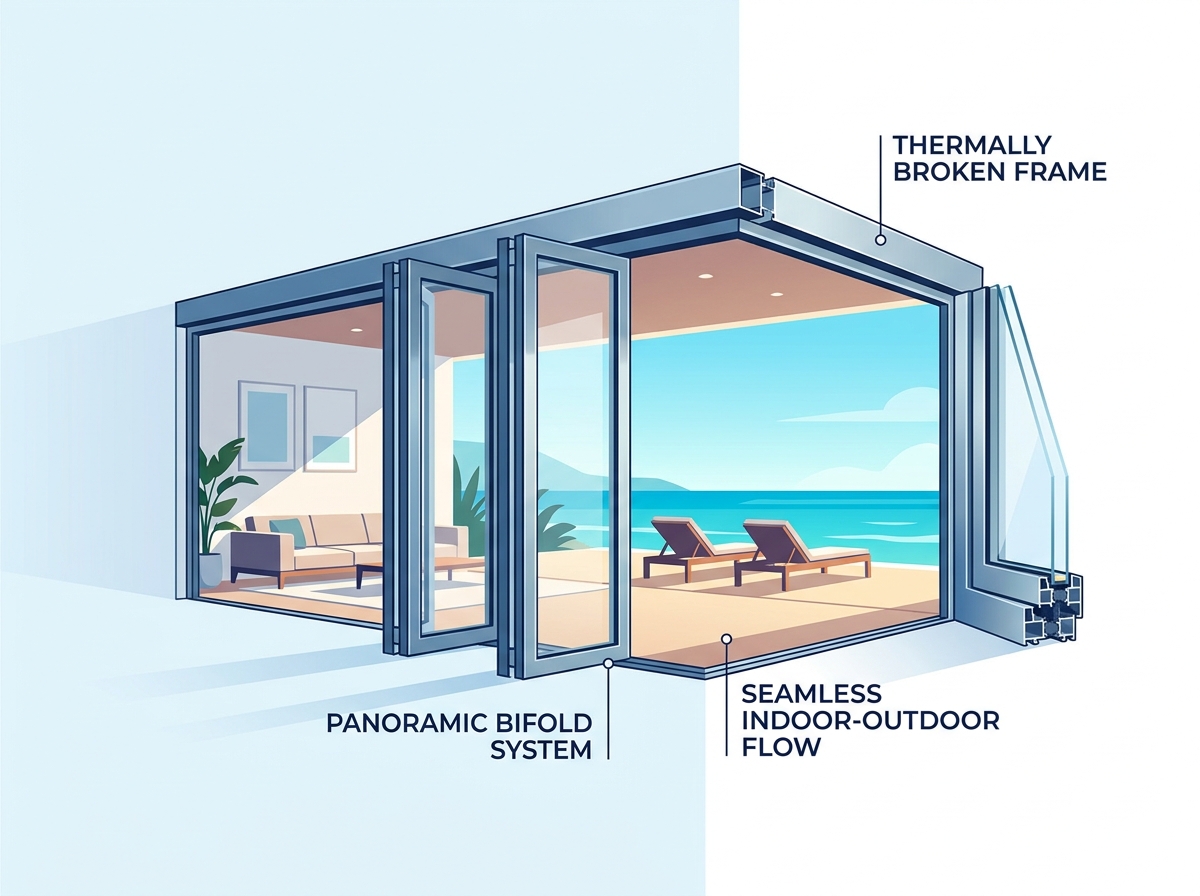
Different resort zones demand highly specific door configurations. We evaluate these systems based on their intended daily use. The chart below outlines primary applications and evaluation metrics.
| System Configuration | Primary Resort Application | Key Evaluation Criteria |
|---|---|---|
| Exterior Panoramic (Bifold/Multi-Slide) | Balconies, Indoor/Outdoor Amenities | Water penetration resistance, Structural headers |
| Interior Sliding & Pocket | Guest Rooms, Bathrooms, Closets | Track durability, Acoustic privacy, Soft-close lifespan |
| High-Traffic Commercial Swing | Lobbies, Restaurants, Event Spaces | Automated operators, Continuous hinges, Panic hardware |
Panoramic doors transform basic resort balconies into premium indoor-outdoor experiences. They work exceptionally well for luxury amenity spaces. We evaluate these systems primarily on their weight distribution mechanisms. Bottom-rolling mechanisms carry heavy insulated glass efficiently. Top-hung systems require massive structural headers above the opening. Sagging headers will crush top-hung tracks over time. Bottom-rolling profiles avoid this structural risk entirely. Water penetration resistance remains another critical factor. Coastal storms test sill drainage capacities severely. We must specify sills with integrated weeping systems.
Interior configurations prioritize space optimization. Sliding doors save valuable square footage in compact guest rooms. Pocket doors hide completely within wall cavities. Slim-profile swing doors offer sleek modern aesthetics. Track durability dictates long-term success for sliding options. Flimsy residential tracks warp under continuous commercial use. Soft-close hardware extends lifespan significantly. It prevents aggressive guests from slamming doors shut. Acoustic privacy matters deeply for bathroom applications. Solid cores and tight perimeter seals block sound effectively.
Common areas endure the most severe physical abuse. Lobbies see thousands of open-close cycles daily. Restaurants and event spaces face similar traffic volumes. We must integrate automated operators seamlessly into these frames. Concealed overhead closers maintain clean visual lines. Continuous geared hinges distribute weight evenly across the entire frame. Standard butt hinges often fail under extreme repetitive loads. Panic hardware compatibility ensures strict fire safety compliance. Everything must function perfectly during sudden emergency evacuations.
Coastal climates destroy standard architectural finishes rapidly. Salt spray causes rapid oxidation and pitting. You must specify marine-grade finishes in these zones. AAMA 2605 compliant powder coatings resist UV fading beautifully. Class I anodizing protects raw aluminum through deep chemical bonding. Extreme temperature zones demand different technical solutions. You must specify thermally broken aluminum frames here. Polyamide struts stop heat transfer instantly between exterior and interior metal. Low-E double or triple glazing meets strict regional energy codes. We measure thermal success through low U-factors. Solar Heat Gain Coefficient (SHGC) ratings help limit interior cooling loads.
No glass door is completely soundproof. We must address this common misconception early during specification. Instead, we aim for specific, verifiable performance targets. Sound Transmission Class (STC) measures airborne noise reduction effectively. Outdoor-Indoor Transmission Class (OITC) handles lower frequencies better. We achieve high acoustic ratings using asymmetrical glass thickness. Mixing a 1/4-inch pane with a 1/8-inch pane disrupts sound waves efficiently. Symmetrical glass allows certain sound frequencies to pass right through. High-density frame seals close critical air gaps. Even a tiny air leak destroys an STC rating completely.
Architects constantly navigate conflicting code requirements at the threshold. Weather-tight sills often create tripping hazards. ADA-compliant low-profile thresholds solve accessibility issues perfectly. However, they complicate exterior water drainage. We resolve this conflict using integrated exterior trench drains. This keeps water out while maintaining a flush transition. Fire-rating requirements dictate specific interior frame designs. Corridors and egress paths need certified fire labels. You must integrate these safety elements into the initial specification. We cannot retrofit panic hardware or fire seals later.
Sourcing complete window and door packages works exceptionally well. A single supplier ensures consistent finishes across the entire property. It reduces glaring aesthetic mismatches between different building elevations. Warranty claims become much simpler later on. You deal directly with one responsible party. Finger-pointing between different component manufacturers stops immediately. Complete packages often include pre-matched hardware. This guarantees that handles, hinges, and locks operate smoothly together. It greatly reduces on-site sorting and assembly time.
Sourcing complex aluminum systems carries inherent logistical risks. Oversized frames require specialized transport and handling equipment. You must establish phased delivery schedules early. Align these deliveries with precise construction milestones. Massive doors arriving too early risk job-site damage. Doors arriving late cause cascading scheduling delays. Transparent communication prevents costly job-site holding patterns. Standard lead times often stretch depending on custom extrusions. Early procurement locks in material pricing. It also secures dedicated factory production slots.
You must evaluate a manufacturer's true production capacity rigorously. Never rely solely on marketing brochures.
Understand exactly what voids the warranty coverage. Coastal applications often require specific maintenance logs to keep warranties valid. Clear vendor verification prevents disastrous mid-project supplier failures.
Mechanical components fail long before the aluminum frames. Rollers, tracks, and handles take the brunt of daily abuse. The metal extrusion itself rarely degrades structurally. Therefore, you must specify commercially rated hardware exclusively. Insist on easily replaceable components from common suppliers. Proprietary, custom-machined locks cause massive future headaches. If a proprietary lock breaks in five years, replacements might not exist. Standardized commercial hardware ensures your facility team can execute rapid repairs.
Oversized aluminum doors are highly unforgiving during installation. Out-of-plumb rough openings ruin operability instantly. A millimeter off-axis ruins the weather stripping seal entirely. We emphasize using certified professional installers only. General contractors often lack the specific glazing expertise required. Installers must understand rigid structural header requirements perfectly. Sagging structural headers will crush sliding door tracks completely. Proper shimming prevents frame distortion during the final fastening phase. Precision matters intensely when installing multi-panel panoramic systems.
Facility management needs realistic daily operational expectations. Even the best hardware requires consistent upkeep.
Sand and debris destroy bottom-rolling tracks quickly. Ignoring basic maintenance accelerates catastrophic hardware failure. Setting these expectations early extends the system's functional lifespan.
Successful specification requires balancing architectural vision with harsh commercial realities. A stunning aesthetic fails if the doors leak during a storm. Premium aluminum configurations deliver exceptional strength-to-weight ratios. They handle oversized applications effortlessly while resisting environmental decay. Coastal climates test surface finishes relentlessly. Guests use hardware roughly every single day. Routine maintenance ultimately determines long-term survival in high-traffic resorts.
Decision-makers must prioritize these realities immediately. Audit your specific project climate first. Define strict acoustic requirements before drafting technical plans. Gather precise field data before asking for manufacturer mock-ups. Request package quotes only from shortlisted, verified manufacturers. Engaging specialized suppliers early prevents costly redesigns later. Proper planning guarantees a flawless installation and superior guest experience.
A: Focus on AAMA 2605 compliant powder coatings or Class I anodized finishes. These premium finishes resist salt spray corrosion effectively. They also prevent severe UV degradation. Standard residential finishes will pit and fade quickly in marine environments.
A: Yes, but it requires careful engineering. You must specify recessed tracks combined with integrated drainage systems. Trench drains prevent exterior water intrusion while maintaining a completely flush, accessible transition.
A: Aluminum offers superior corrosion resistance compared to standard commercial steel. It provides a significantly lighter weight for oversized sliding applications. Furthermore, aluminum eliminates the constant warping and refinishing cycles associated with commercial wood doors.
A: Expect a realistic, conservative range of 10 to 16 weeks. This timeline depends heavily on custom extrusion requirements and specific glass specifications. Early procurement remains crucial to avoid construction delays.