
English
Views: 0 Author: Site Editor Publish Time: 2026-08-16 Origin: Site


Aluminum doors offer an undeniable architectural appeal. Their slim sightlines and structural durability perfectly frame modern living spaces. We often choose them to maximize natural light and create seamless indoor-outdoor transitions. However, this minimalist design creates a core tension. Aluminum is highly conductive. This structural reality means the glass unit must carry the weight of the door’s overall energy efficiency.
Selecting the wrong glass can ruin an otherwise perfect architectural design. You might compromise home security, suffer from street noise, or struggle to control interior temperatures during harsh weather. If you pair premium metal frames with subpar glazing, your home will suffer from uncomfortable drafts and steep utility bills.
This article provides a transparent, criteria-driven framework for your project. You will learn how to evaluate specific aluminum door glass options based on hard data. We will help you balance thermal performance, code-compliant safety, and architectural privacy to ensure your doors perform beautifully for decades.
You cannot evaluate glass performance without understanding the frame surrounding it. Standard aluminum transfers heat rapidly. It acts as a thermal bridge between the harsh exterior weather and your climate-controlled interior. On a freezing winter night, standard aluminum pulls the cold directly inside. During a scorching summer day, it invites the heat indoors.
We must state a transparent assumption upfront. Upgrading your glass without specifying "thermally broken" aluminum frames yields poor thermal results. A thermal break involves inserting a non-conductive material—usually a polyamide strut—between the interior and exterior metal profiles. This structural barrier physically stops the heat transfer. If you install top-tier triple glazing in standard, unbroken aluminum, you are wasting your money. The frame will still leak energy and cause severe indoor condensation.
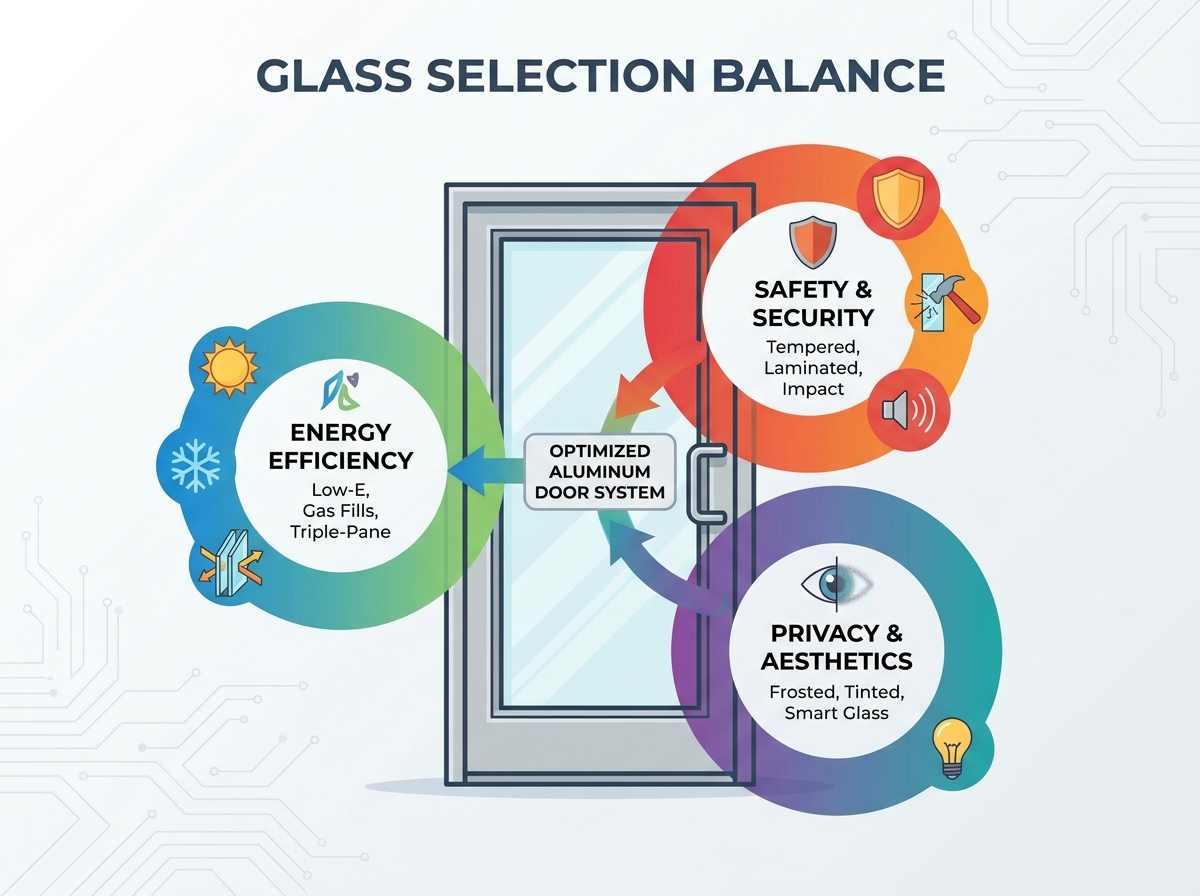
Once you secure a thermally broken frame, you must define your success criteria. The right glass choice depends entirely on three distinct factors. First, consider your local climate zones. Extreme winters demand different glazing than tropical heat. Second, evaluate your security threat models. A street-facing entryway presents different vulnerabilities than a fenced backyard patio. Third, assess specific room functionality. A bedroom balcony door requires different noise control than a living room sliding wall. We will use these three pillars to evaluate your best aluminum door glass options.
Energy efficiency relies on layers of protection. Manufacturers build insulated glazing units (IGUs) by combining multiple panes, specialized coatings, and insulating gases. Understanding how these elements interact helps you make smarter choices.
Single-pane glass is obsolete for exterior doors. Today, the conversation starts at double-pane glass and moves upward.
Double-pane glass remains the industry standard. It features two panes separated by an insulating spacer. This setup is entirely sufficient for moderate climates. It provides a reliable balance between upfront costs, thermal efficiency, and physical weight. Lighter panels reduce daily wear and tear on your sliding or pivoting door hardware.
Triple-pane glass offers maximum thermal insulation. It utilizes three panes of glass and two separate insulating cavities. However, this upgrade introduces significant implementation risks. Triple-pane units drastically increase panel weight. A massive multi-slide door with triple glazing often requires heavy-duty stainless steel rollers. The sheer mass can also reduce the maximum allowable width for operable sliding door panels. You must verify structural limits with your manufacturer.
| Glazing Type | Thermal Insulation | Weight Impact | Ideal Climate Usage |
|---|---|---|---|
| Double-Pane | Standard (Good) | Moderate (Standard Hardware) | Moderate, Mixed Climates |
| Triple-Pane | Maximum (Excellent) | Heavy (Requires Upgraded Rollers) | Extreme Cold or High Heat |
Low-E coatings are microscopic metallic layers applied to the glass surface. They reflect radiant heat while allowing visible light to pass through. You must match the coating type to your geography.
The empty space between glass panes does not stay empty. Manufacturers pump dense inert gases into these cavities. Argon and Krypton are heavier than standard air. They significantly reduce convective heat transfer between the panes.
Argon provides excellent value and works best in half-inch gaps. Krypton is denser, more expensive, and works perfectly in the narrower gaps often found in triple-pane units. Note a practical reality: gas naturally leaks at a fraction of a percent per year. Over a 10 to 20-year lifespan, this slightly reduces peak efficiency, though the door remains highly insulating.
Do not rely on marketing buzzwords. Use standardized metrics established by institutions like the U.S. Department of Energy (Energy.gov) to measure aluminum door glass options.
Doors present unique physical hazards. Because people walk through them, building codes strictly regulate door glass to prevent severe injuries. Beyond basic safety, modern glazing can actively defend your home against intruders and environmental noise.
Tempered glass serves as the baseline safety standard for all modern doors. During manufacturing, the glass undergoes extreme heating and rapid cooling. This thermal process makes it four to five times stronger than standard annealed glass.
When broken, tempered glass behaves uniquely. It shatters instantly, crumbling into small, blunt pebbles rather than lethal, sharp shards. The International Residential Code (IRC) legally mandates tempered safety glass for all operable doors. The code also requires tempering for any adjacent sidelights positioned within 24 inches of the door edge.
If you want serious protection, you should upgrade to laminated glass. Manufacturers create laminated glass by bonding two glass panes around a strong polymer interlayer, typically Polyvinyl Butyral (PVB).
Laminated glass offers massive security benefits. When struck by a heavy object, the glass cracks but remains firmly adhered to the PVB interlayer. It stays locked inside the door frame. This behavior significantly delays forced entry. Burglars cannot quickly smash the glass and reach the interior deadbolt.
It also delivers immense acoustic benefits. The polymer core acts as a sound dampening barrier. Standard tempered double-pane units usually hold a Sound Transmission Class (STC) rating around 28. Upgrading to laminated glass can push the STC rating into the high 30s. This drastically reduces traffic noise, sirens, and neighborhood clamor in urban environments.
Coastal homes face different threats. Homes located in High-Velocity Hurricane Zones (HVHZ) require specialized impact-resistant glass. This glazing combines heavy-duty laminated glass layers with extra-thick PVB or SentryGlas interlayers. Technicians test these units by firing two-by-four timber projectiles at them to simulate flying hurricane debris. They ensure the building envelope remains sealed during catastrophic wind storms.
Large aluminum doors flood rooms with natural light. However, they also expose your private life to neighbors and passersby. You can utilize several architectural glass solutions to obscure visibility without sacrificing beautiful daylight.
Textured glass introduces physical patterns into the glass surface during manufacturing. Common patterns include frosted (acid-etched or sandblasted), rain, and reeded glass. Reeded glass features vertical fluting, offering a highly popular mid-century modern aesthetic.
Manufacturers rate obscurity levels on a scale from 1 to 10. A rating of 1 offers minimal distortion, while a 10 provides complete obscurity where you only see vague shadows. You must balance this obscurity rating against Visible Light Transmittance (VLT). Highly obscure frosted glass diffuses light beautifully but slightly reduces the total volume of natural brightness entering the room.
Tinted glass alters the color of the pane. Gray, bronze, or reflective tints offer excellent daytime privacy. They also reduce harsh interior glare, protecting your furniture from fading.
However, tinted glass poses a specific functional limitation. It relies on the difference in light intensity between indoors and outdoors. During the day, the brighter outdoor sun makes the glass reflective and private. At night, the effect reverses. When you turn on your interior lights, outsiders can see directly into your home. You will still need interior window treatments for nighttime privacy.
Smart glass represents the cutting edge of architectural glazing. Electrochromic smart glass transitions from completely clear to fully opaque at the flip of a switch or via a smartphone app. It uses an electrical current to align liquid crystals within the glass interlayer.
While the aesthetic is stunning, you must face the implementation reality. Smart glass carries a drastically higher upfront cost. It also requires complex electrical hardwiring directly into the aluminum frame during the manufacturing process. You cannot easily retrofit smart glass into existing standard doors. Ensure your project budget and electrical plans accommodate this advanced technology early in the design phase.
Choosing the right configuration requires a structured approach. Use this clear decision framework to narrow down your aluminum door glass options successfully.
The best aluminum door glass options do not exist in a vacuum. You must align your glazing choices with the surrounding framing technology and your specific architectural application. High-end glass will underperform if placed inside a highly conductive, standard aluminum frame. You need thermally broken systems to harness the full potential of Low-E coatings and inert gas fills.
Furthermore, balancing safety, acoustics, and privacy requires careful consideration of laminated layers and obscure textures. A street-facing door serves a fundamentally different purpose than a backyard slider.
Your next step is clear. Consult with a certified fenestration specialist or a reputable local dealer. Ask them to run a localized energy model tailored to your home’s exact orientation. Finally, always review physical glass samples in natural light before making your final purchasing decision.
A: Often yes. This process is called reglazing or replacing the Insulated Glazing Unit (IGU). However, you face one major restriction. The aluminum frame's glazing pocket must be wide enough to accommodate the new glass thickness. You cannot upgrade from a thin single pane to a thick triple pane without changing the whole door.
A: Older Low-E coatings definitely carried a noticeable green tint. Modern coatings are highly transparent and color-neutral. However, if you require extreme energy efficiency, applying multiple heavy layers of Low-E can still slightly reduce visible light transmittance (VLT) and create a faint tint under certain lighting conditions.
A: Condensation occurs when warm interior humidity hits a cold surface. If your glass boasts a good U-factor but condensation still forms heavily around the edges, the glass is not the problem. Your aluminum frame likely lacks an adequate thermal break, allowing exterior cold to chill the interior metal.
A: No. Laminated glass exists primarily for physical safety, forced-entry security, and acoustic sound dampening. It does not provide thermal insulation on its own. To achieve high energy efficiency, manufacturers must combine the laminated pane into a sealed IGU complete with Low-E coatings and argon gas.