
English
Views: 0 Author: Site Editor Publish Time: 2026-07-12 Origin: Site


Evaluating window upgrades requires understanding both mechanical function and material science. Top-hinged, outward-opening awning windows provide unique ventilation capabilities for modern architecture. However, the framing material ultimately dictates their long-term performance and aesthetic appeal.
Before diving in, we must distinguish aluminum awning windows from exterior aluminum window awnings. We are discussing the operable glass fixtures, not exterior metal shades. Homeowners and builders often struggle to deliver reliable airflow in wet climates while maintaining rigid structural integrity and ultra-slim sightlines. Relying on the wrong frame materials can compromise both weatherproofing and visual design.
This guide explores how these specific window systems solve complex architectural challenges. We will cover ideal placement strategies, evaluate crucial material trade-offs, and outline strict buying criteria. You will learn exactly how to specify hardware, navigate installation codes, and select the right thermal configurations for your next project.
Architects position top-hinged windows in specific zones to maximize their unique mechanical advantages. High-wall placements represent one of the most common applications. Installing them near the ceiling in basements, bathrooms, and vaulted spaces allows hot air to escape naturally. You gain essential airflow while maintaining complete visual privacy.
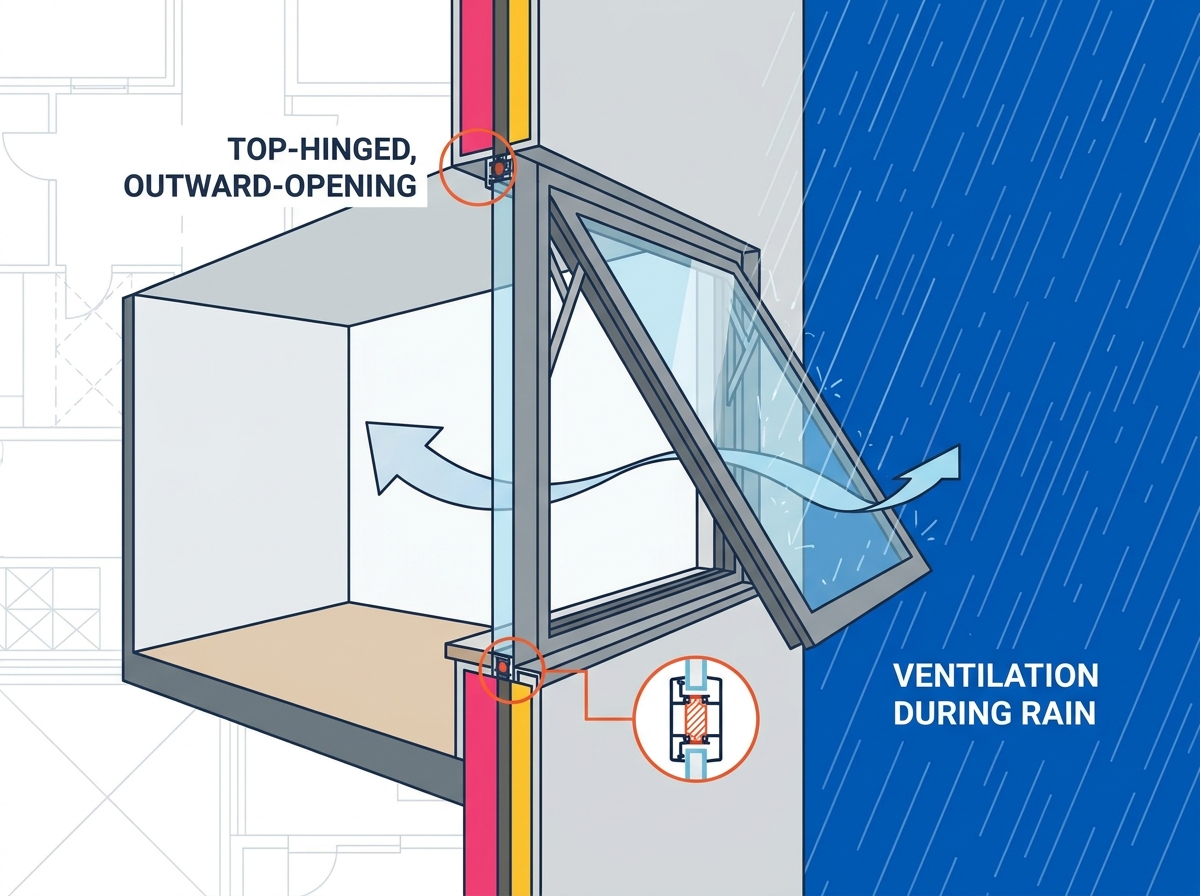
Weather-exposed facades also benefit immensely from this design. The outward-opening sash acts as a structural canopy. It sheds water away from the opening. This feature lets you keep windows open during steady rain without risking interior water damage. Continuous ventilation in wet climates becomes completely hands-free.
Builders frequently use architectural combinations to maximize both light and air. You can pair operable awning units with large fixed picture windows. Placing an awning section at the bottom or top of a massive glass pane adds operable ventilation. You achieve this without running thick vertical mullions through your primary sightlines.
Finally, modern and industrial aesthetics demand clean lines. Leveraging the rigid profile of metal allows for minimalist, narrow-frame designs. Traditional materials like vinyl and wood cannot support large expanses of glass safely without thicker frames. Aluminum awning windows deliver the coveted floor-to-ceiling glass appearance while remaining fully functional.
Selecting frame materials requires balancing durability against environmental performance. Aluminum offers high resistance to rust, warping, and rot. These frames easily outlast harsh weather conditions. Anodized and powder-coated finishes provide excellent color retention. In contrast, dark vinyl frames carry significant fading and warping risks under heavy UV exposure.
Structural integrity remains a primary advantage. Metal frames have the ability to support heavier, multi-pane glass packages. They do this without sagging at the hinges over a 15-to-20-year lifecycle. You can install triple-pane acoustic glass without stressing the surrounding casement hardware.
However, buyers must confront the thermal reality of metal frames. Aluminum has high thermal conductivity. It transfers exterior cold and heat directly inside. You must explicitly check for "thermally broken" aluminum frames. These feature internal polyurethane separators. The separator physically breaks the metal-to-metal contact, preventing interior condensation and halting major heat loss.
Cost positioning places aluminum as a mid-to-high-tier investment. It remains more expensive than standard vinyl extrusions. Yet, it proves highly cost-effective over a 20-year horizon compared to architectural wood, which requires constant staining and sealing.
| Material Feature | Thermally Broken Aluminum | Standard Vinyl | Architectural Wood |
|---|---|---|---|
| Structural Strength | Exceptional | Moderate | High |
| Frame Profile Width | Ultra-Narrow | Thick | Medium-Thick |
| Maintenance Needs | Minimal | Minimal | High |
| Moisture Resistance | Excellent | Excellent | Poor (If unsealed) |
Navigating the specification process requires attention to precise metrics and hardware details. Evaluating aluminum awning windows means looking past aesthetics to scrutinize the underlying engineering.
Installing top-hinged windows introduces unique construction and compliance challenges. Understanding these risks upfront prevents costly tear-outs and failed municipal inspections.
Procuring the right units means looking closely at the contractor bids. You need to differentiate the fine print when comparing estimates for aluminum awning windows.
First, tackle warranty verification. Manufacturers rarely offer a single blanket warranty. Differentiate between frame warranties, which often cover 10 to 20 years. Contrast these against glass seal failure warranties. Finally, check the moving parts and hardware warranties, which are often much shorter. A bid should list these three separate warranty timelines clearly.
Next, clarify installation requirements to prevent galvanic corrosion. Specialized installation matters immensely for aluminum. If aluminum touches untreated masonry or dissimilar metals like steel, it corrodes rapidly. Installers must use correct stainless steel fasteners. They must also apply protective tapes or bituminous coatings when placing frames against concrete.
Create a standardized checklist for your contractors. Provide them with exact specifications to ensure an apples-to-apples bid. List your exact rough opening dimensions. Specify the exact glass type, including Low-E coatings and argon gas fill. Demand confirmation of the thermal break status. Finally, state your preferred exterior and interior finish colors.
| Specification Item | Required Detail to Provide Contractors |
|---|---|
| Thermal Profile | Must specify "Thermally Broken Polyurethane Core" |
| Glass Package | Double or Triple Pane, Low-E, Argon Gas Filled |
| Hardware Type | Stainless steel scissor hinges, folding nestable crank |
| Fasteners | Stainless steel screws to prevent galvanic corrosion |
Upgrading to modern top-hinged glass units transforms how a building breathes. Aluminum awning windows are optimal for architectural modern builds and high-moisture ventilation zones, provided thermal breaks are strictly specified. They combine striking narrow sightlines with unmatched rain-shedding capabilities.
Take time to measure your rough openings accurately. Consult your local building codes regarding strict egress regulations before finalizing floor plans. Request detailed quotes from certified installers who understand galvanic corrosion prevention.
Move forward by downloading the NFRC ratings for your climate zone. Select a hardware finish that matches your interior space. Finalize your specifications checklist to ensure your home benefits from decades of smooth, weather-tight ventilation.
A: Yes, provided they feature thermally broken frames and modern insulated glass. The thermal break stops the metal from conducting heat and cold. Pairing this frame technology with Low-E glass and argon gas ensures they meet strict energy codes and maintain comfortable interior temperatures.
A: Cleaning the exterior requires outside access or specialized cleaning tools. Unlike double-hung windows, they do not tilt inward. For ground-level installations, standard exterior washing is easy. For second-story placements, you will need an extension pole, a ladder, or professional window washing services.
A: Generally, no. Building codes require bedroom windows to serve as emergency escape routes (egress). The outward-pushing sash and the central scissor hardware block the physical escape path. You should only use them in bedrooms if another window or door already meets the legal egress requirement.
A: The difference lies in the hinge placement and swing direction. An awning window hinges at the top and pushes outward from the bottom. A hopper window hinges at the bottom and pulls inward from the top. Hoppers are typically used in basements near ground level.